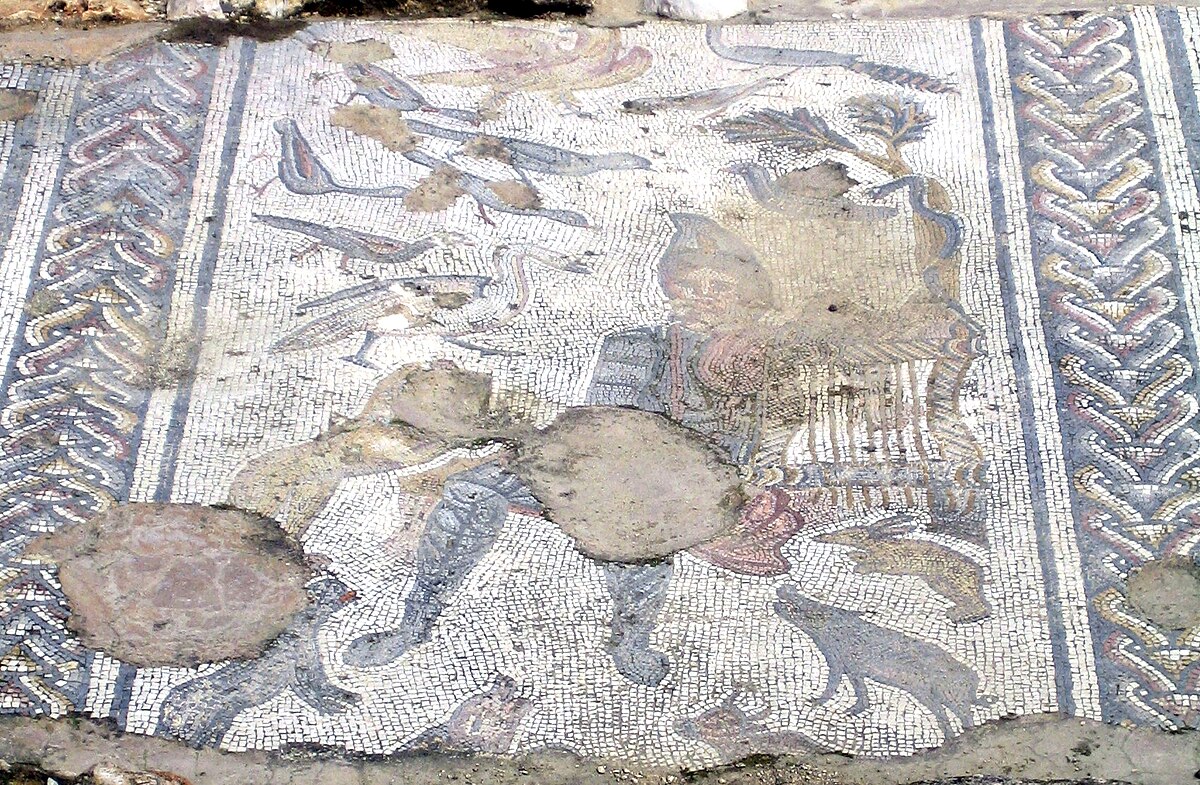
Psychopomp
Definition
Psychopomp (Greek: psychopompos, from psychē, soul, and pompos, guide or escort) designates the structural role of the one who guides souls between worlds: from life to death, from the ordinary to the sacred, from the surface world to the underworld and back. The psychopomp is not the revealer (the hierophant's function, CON-0010) but the companion and escort: the being who has traversed the threshold and knows the territory, and who accompanies the traveler through it.
In Greek mythology, Hermes Psychopompos is the paradigm: the messenger of the gods who escorts the newly dead to Hades, who guides the souls of the sleeping through their dream journeys, and who in the myth of Persephone accompanies her return from the underworld at Hermes's instruction from Zeus. Hermes is the boundary-crosser, the god of thresholds, who can move between domains because he is identified with neither. He belongs to the liminal space between them. This liminal identity is inseparable from the psychopomp function: only one who is genuinely at home in the between-space can guide others through it.
The psychopomp is distinct from the hierophant (CON-0010) in several important ways. The hierophant shows, reveals the sacred content at the culminating moment of initiation. The psychopomp accompanies, walks alongside the initiate through the entire dangerous passage. The hierophant is the endpoint's gatekeeper; the psychopomp is the passage's companion. Both roles are essential to the initiatory process, but they require different qualities: the hierophant needs the authority to reveal; the psychopomp needs the experience of having traveled the territory and the skill to read the signs along the way.
The psychopomp is also distinct from the teacher. The teacher transmits knowledge from a position of greater knowledge to lesser, in a relatively safe pedagogical context. The psychopomp accompanies the initiate through an experience that is genuinely dangerous, the symbolic (or literal) territory of death and dissolution, and must be capable of navigating that territory under conditions where the ordinary cognitive and social resources that support the teacher's role are suspended. This requires something different from knowledge: it requires the experiential authority of one who has made the journey and survived it.
Tradition by Tradition
Ancient Greek (Hermes, Charon, Orpheus)
Hermes Psychopompos is the central Greek figure: he appears in the Odyssey escorting the souls of Penelope's slain suitors to Hades, in the Hymn to Demeter escorting Persephone's return, and in numerous artistic representations accompanying the newly dead. Charon, the ferryman of the dead, represents the more mechanical dimension of the psychopomp function, the necessary passage that must be undergone regardless of the quality of the relationship. Orpheus represents the psychopomp in his most heroic form: the human who descends to the underworld and guides a soul back through the power of music and love. Orpheus's failure, looking back, losing Eurydice, teaches the limit of the psychopomp's power: the guide can accompany and protect, but cannot override the fundamental laws of the threshold.
Egyptian (Anubis, Thoth)
Anubis, the jackal-headed Egyptian deity, is the psychopomp of the Egyptian afterlife tradition: he weighs the heart of the deceased against the feather of Ma'at (truth, justice, cosmic order) and guides the justified soul through the Duat (the underworld). Thoth, the ibis-headed god of wisdom and writing, records the judgment and provides the spells (the "opening of the mouth," the texts of the Book of the Dead) that the soul requires to navigate the underworld safely. In Egyptian mortuary practice, the psychopomp function was served not only by mythological deities but by the funerary priest who performed the rites, a human acting in Anubis's role, serving as the mediating figure between the living and the dead.
Shamanic
In shamanic traditions, the psychopomp function is the shaman's primary social responsibility. The shaman has made the journey to the underworld or the upper world, typically through an initiatory illness and transformation (CON-0035, liminality), and can now guide others. They escort the souls of the recently deceased to their proper place; they retrieve the soul fragments of the living who have suffered "soul loss" through trauma; they navigate between the ordinary world and the spirit world to bring knowledge and healing. The shaman's authority to perform these functions derives precisely from their experience of the territory; they know the way because they have been there.
Medieval Christian (Virgil in Dante)
Dante's Commedia provides the most elaborate literary psychopomp in the Western tradition. Virgil, the pagan poet whose Aeneid contained its own katabasis (Aeneas's descent to the underworld in Book VI), serves as Dante's guide through Hell and Purgatory. Virgil's role is specifically psychopomp: he knows the territory because he has been there (or at least has written the poetry that mapped it), and he accompanies Dante through the entire passage. Virgil cannot proceed into Paradise (his pagan status excludes him from the Christian heaven) and at that threshold, Beatrice takes over as Dante's guide. This layering of psychopomps reflects the tradition's understanding that different guides are appropriate to different domains: the underworld requires a guide who has knowledge of darkness; paradise requires a guide who has knowledge of light.
Tibetan Buddhist (Bardo Thodol)
The Bardo Thodol (Tibetan Book of the Dead, 8th century, attributed to Padmasambhava) is designed to function as a psychopomp in text: it is read aloud to the dying or recently deceased to guide the consciousness through the bardo states (the intermediate states between death and rebirth). The Tibetan tradition also has living psychopomps, trained lamas who accompany the dying and guide them through the bardo experience through prayer, visualization, and instruction. The bardo guides whom the deceased may encounter are understood as manifestations of their own mind's nature; the psychopomp's role is to help the consciousness recognize these manifestations rather than flee in fear.
Project Role
The psychopomp makes a specific argument about what genuine initiatory transmission requires: a guide who has made the journey. This is the project's sharpest critique of both text-based spirituality and AI-assisted spiritual exploration. A text can describe the territory; an algorithm can map the descriptions; but neither has been to the underworld. The psychopomp's authority derives from experience, not from information; from having undergone the dissolution and returned transformed, not from having processed accounts of dissolution.
The contemporary psychedelic revival has generated renewed interest in the psychopomp function. The trained guide who accompanies the psychedelic voyager through the experience is explicitly described in the literature as a psychopomp. This is one of the few contemporary spiritual contexts in which the psychopomp function is being taken seriously as a distinct and demanding competence, not reducible to general therapeutic training.
Distinctions
Psychopomp vs. Hierophant: The hierophant reveals the sacred object at the culminating moment; the psychopomp accompanies through the entire passage. These are complementary but distinct roles. In some traditions, a single figure performs both; in others (as in Dante's Commedia), multiple guides are sequentially required.
Psychopomp vs. Teacher: The teacher transmits knowledge in a relatively safe pedagogical context. The psychopomp accompanies through genuinely dangerous territory. The authority required is different: pedagogical authority (knowledge and skill at transmission) versus experiential authority (having made the journey).
Psychopomp vs. Therapist: The contemporary therapist shares elements of the psychopomp function (accompanying the client through painful psychological territory) but typically within a clinical and ethical framework that maintains the therapist's safe distance. The traditional psychopomp was not safe from the territory they were navigating; Virgil was genuinely in Hell, not observing it from a clinical remove.
Primary Sources
- Homer, Odyssey, Book 24 (c. 800 BCE): Contains the first extended Greek depiction of Hermes Psychopompos, leading the souls of the slain suitors to the underworld.
- Mircea Eliade, Shamanism: Archaic Techniques of Ecstasy (1951): The most thorough cross-cultural study of the shaman as psychopomp, with detailed accounts of soul-escort practices across Siberian, Central Asian, and North American traditions.
- Dante Alighieri, Inferno and Purgatorio (c. 1308–1320): The most elaborate literary treatment of the multi-layered psychopomp, with Virgil's guidance through the underworld as the primary model.
- Padmasambhava (attrib.), Bardo Thodol (Tibetan Book of the Dead, 8th century, first printed 1516): The text that functions as a psychopomp, guiding the consciousness through post-death states.
- C.G. Jung, Memories, Dreams, Reflections (1962): Contains Jung's account of his encounter with his own psychopomp figure (Philemon) in his active imagination work, relevant for the depth-psychological dimension of the concept.
Homer: Circe and Teiresias as Psychopomps (Odyssey, LIB-0183)
In the Odyssey, the psychopomp function splits between two figures. Circe provides the instructions for reaching the boundary of the dead: the route, the rituals, the sacrifices. She is the guide who cannot accompany. Teiresias is the psychopomp at the threshold itself: the dead prophet who mediates between the living hero and the knowledge of the underworld. Hermes, the traditional psychopomp, appears elsewhere in the Odyssey (escorting the suitors' souls to Hades in Book XXIV), but in the nekuia his role is dispersed. The Homeric distribution of the psychopomp function (one guide to the threshold, another at the threshold, a third for the return) reflects a consciousness in which the boundary between living and dead is not a single door with a single keeper but a graduated passage requiring different mediators at each stage.
Virgil: The Sibyl as Institutional Psychopomp (Aeneid VI, LIB-0222)
The Sibyl of Cumae is the Aeneid's psychopomp, and she represents the institutionalization of the psychopomp function. Where Homer's Circe gives instructions from a distance, the Sibyl accompanies Aeneas throughout the descent, explains what he sees, negotiates with Charon, and mediates his passage through the underworld. She is a priestess of Apollo and Hecate; her authority derives from her connection to specific divinities, and her role is professional rather than personal. The golden bough she instructs Aeneas to pluck is the passport the psychopomp provides: the object that grants safe passage through the realm of death.
Virgil's Sibyl is the literary ancestor of Dante's Virgil, the guide whose authority comes from prior experience (the Sibyl has made the journey before) and whose function is to ensure the katabatic traveler survives the descent and returns with the knowledge the descent was undertaken to acquire. The project reads the Sibyl as the Virgilian form of the Hierophant: the one who has seen and can therefore lead.
Agent Research Notes
[AGENT: perplexity | DATE: 2026-03-22] The contemporary psychedelic therapy literature has developed a sophisticated practical understanding of the guide/psychopomp function. Stan Grof's work (LSD: Doorway to the Nether Worlds, 1975; domains of the Human Unconscious, 1975) and the MAPS protocol for MDMA-assisted therapy both emphasize the guide's role and the specific qualities it requires. This contemporary development is one of the most interesting points of contact between the mystery traditions and current practice, and the project should engage it carefully, acknowledging both the genuine parallels and the significant differences (especially around cosmological context, community, and the fullness of the initiatic structure).