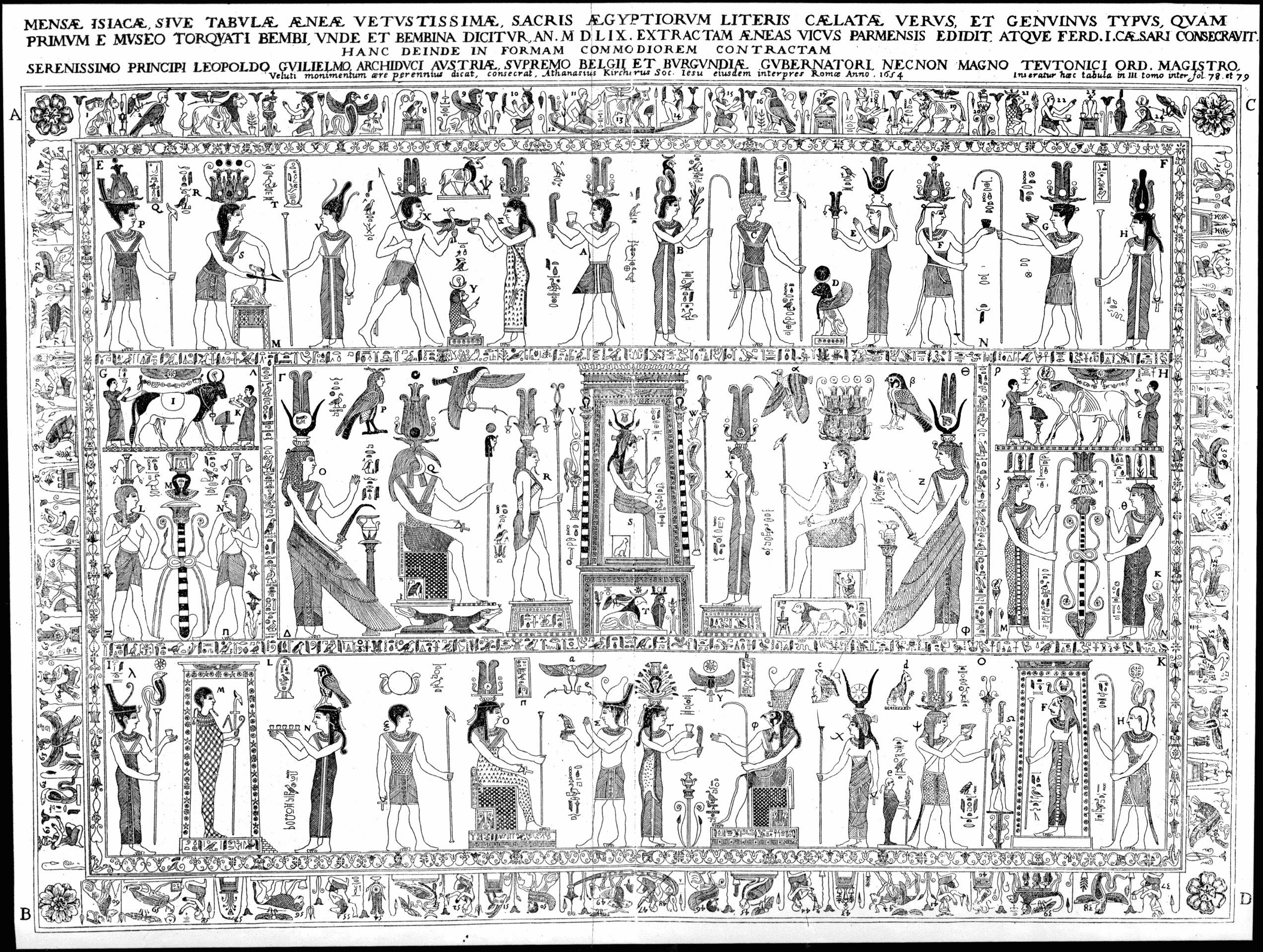
Isiac Mysteries
Definition
The Isiac Mysteries were the mystery religion centered on the Egyptian goddess Isis and her consort Osiris, adapted for Hellenistic and Roman audiences and practiced across the Roman Empire from the third century BCE to the late fourth century CE. Unlike the Eleusinian Mysteries, which were bound to a single site and administered by hereditary priestly families, the Isiac cult was portable: temples of Isis operated independently in cities across the Mediterranean, each offering initiation into the goddess's mysteries.
The mythological core was the story of Osiris's murder by Set, his dismemberment, Isis's search for and reassembly of the body, and Osiris's resurrection as lord of the dead. The initiate's identification with Osiris (dying, being reassembled, rising) provided the experiential structure. The Isiac initiation, as described by Apuleius, involved voluntary death ("I approached the boundary of death"), passage through the elements, a nocturnal vision of the sun, and emergence at dawn dressed in ceremonial robes before the assembled worshippers.
Relationship to Eleusinian Mysteries
Both traditions center on a female deity's grief (Demeter for Persephone, Isis for Osiris), a descent-and-return structure, and the promise of a transformed relationship to death. The differences are as instructive as the parallels. Eleusis was civic and annual; the Isiac cult was personal and available year-round. Eleusis required pilgrimage to a specific site; Isis could be approached anywhere. The Isiac cult offered multiple grades of initiation; Eleusis had essentially two (myesis and epopteia). The Isiac cult actively sought converts; Eleusis did not proselytize.
The Isis-to-Mary Transfer
When the Isiac temples were closed under Theodosius, many of Isis's attributes transferred to the Virgin Mary: divine mother, queen of heaven, stella maris (star of the sea), protector of sailors, intercessor between humanity and the divine. The iconographic transfer is documented: the image type of Isis nursing Horus became the Madonna and Child. The last temple of Isis at Philae in Upper Egypt was not closed until 535 CE, well into the Christian period. The transfer was not conspiracy but cultural continuity: the need the Isiac cult served did not disappear with the institution.
Apuleius: The Only Inside Account
Apuleius's Metamorphoses (LIB-0137, 2nd century CE) provides the single most important first-person account of Isiac initiation in ancient literature. Lucius, restored from donkey form by Isis's intervention, undergoes initiation at Cenchreae near Corinth. His account, constrained by the initiatory oath, is compressed but precise: "I approached the boundary of death and, having trodden the threshold of Proserpina, I was carried through all the elements and returned. At midnight I saw the sun shining with a brilliant light." This passage maps the Isiac initiation onto the same katabatic structure the project traces at Eleusis: approach to death, passage through the elements (the cosmic totality), and a vision of overwhelming light in total darkness. The goddess moves first: Isis appears unbidden to Lucius, instructs him to eat the roses from her priest's garland, and his restoration is public, witnessed, and communal. Apuleius positions the Isiac mysteries as a divine gift, not a human achievement. The initiate's preparation (ten books of suffering as a donkey) is necessary but not sufficient; the decisive act is the goddess's choice to intervene.
Agent Research Notes
[AGENT: claude-code | DATE: 2026-03-30] Added Apuleius subsection with material from LIB-0137. The Metamorphoses Book XI remains the only first-person initiation account from any ancient mystery tradition.