I. What Burkert Refuses
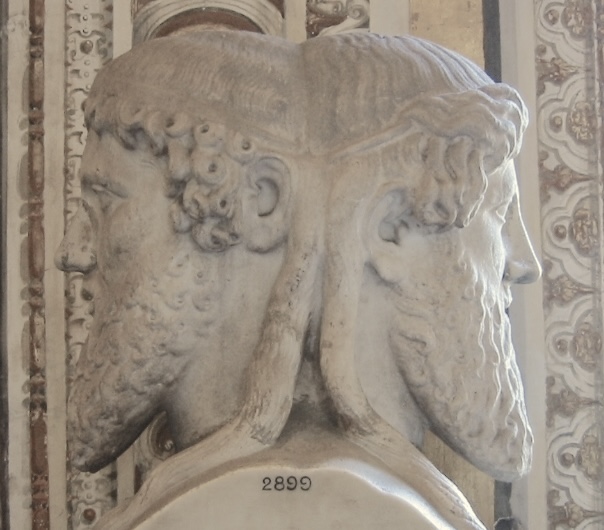
Walter Burkert opens Ancient Mystery Cults with a clearing operation. He removes, one by one, the frameworks that scholars and enthusiasts have projected onto the ancient mysteries for two centuries. The mysteries were not "Oriental" imports that corrupted pure Greek religion. They were not proto-Christianity, rehearsing the death and resurrection of a god before Christ arrived to fulfill the pattern. They were not a single unified phenomenon called "the Mysteries" that can be discussed as though Eleusis and a Mithraic cave in Ostia were branches of the same institution. They were five distinct traditions (Eleusinian, Dionysian, Meter, Isis, Mithras) that shared a family resemblance and nothing more.
This refusal to inflate is Burkert's signature move and his greatest contribution. Where Eliade sees universal structure, Burkert sees particular institutions. Where the Romantics see sublime wisdom lost, Burkert sees contractual religion operating within the normal parameters of ancient Mediterranean piety. Where the entheogenic hypothesis sees pharmacology, Burkert sees ritual mechanics (darkness, fasting, torchlight, sudden revelation) that produced their effects through the body's own responses to extreme sensory manipulation.
The book is based on the Carl Newell Jackson Lectures delivered at Harvard in 1982. It is 185 pages long. It says more in those pages about what the mysteries actually looked like, from the outside, than most books three times its length. Burkert writes with the compressed authority of a classicist who has spent decades with the primary sources and has no patience for speculation that outruns the evidence.
II. The Structure of the Deal
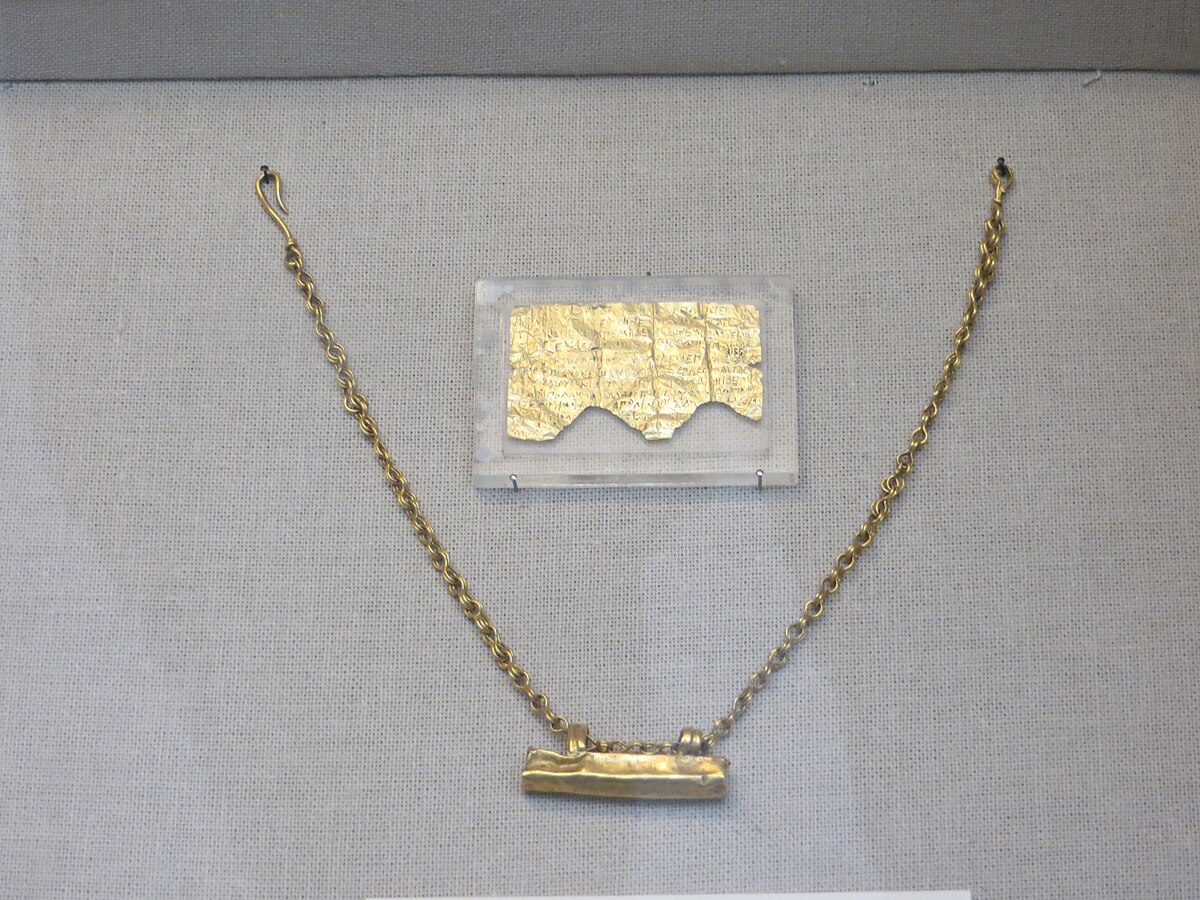
Burkert's most provocative argument concerns motivation. Why did people seek initiation? The standard scholarly answer, and the Romantic one, emphasizes the search for meaning and contact with the divine, above all for assurance about death. Burkert does not dismiss these motivations, but he grounds them in something more immediate: the ancient Mediterranean practice of votive religion, the transactional relationship between human and god summarized in the formula do ut des, "I give so that you may give."
The mysteries, in Burkert's account, operate within this transactional framework. The initiate approaches a deity with specific needs: healing, protection, prosperity, safe passage through death. The initiation is the ritual through which the relationship is formalized. The secrecy is not metaphysical concealment of transcendent truth; it is the social mechanism that creates group identity and ensures the ritual's power by restricting access. The god is not a cosmic principle but a personal patron. The initiate becomes, in Burkert's term, the deity's "servant" or "soldier," bound by a specific relationship with specific obligations and specific benefits.
This is the reading that makes Eliade's disciples uncomfortable, and it should. Burkert is arguing that the mysteries were, at their functional core, an extension of ordinary ancient piety, not a rupture with it. The Isis initiate described by Apuleius in the Metamorphoses does not transcend the human-divine transaction. He deepens it. He takes on heavier obligations, pays steeper costs, and in return the goddess shields him. The transformation is real, but it operates within the logic of reciprocal obligation, not outside it.
The argument has force. It also has a limit, and the limit is visible in Burkert's own evidence.
III. What Happened in the Dark
The fourth chapter of Ancient Mystery Cults is titled "The Extraordinary Experience." It is the chapter where Burkert's empirical discipline encounters something it cannot fully contain.
He describes the phenomenology of initiation with his usual precision. The mysteries took place at night. The initiates fasted. They processed, sometimes for days. They entered enclosed, darkened spaces. Then: sudden light. Torches. The revelation of sacred objects: deiknumena, things shown. Words spoken: legomena, things said. Actions performed: dromena, things done. The sensory architecture was designed to overwhelm. Terror gave way to relief, darkness to blazing light. Hunger and exhaustion opened the body to a vision that could never afterward be described.
Burkert quotes Plutarch's famous account: the initiate wanders in darkness, shudders, trembles, and then "a wonderful light meets you, and pure places and meadows receive you, with voices and dances and the solemnities of sacred utterances and holy visions." He quotes the Eleusinian formula: "I have fasted, I have drunk the kykeon, I have taken from the chest, having worked I have placed back into the basket and from the basket into the chest." He notes, correctly, that this tells us almost nothing about what actually happened. The formula is a credential, not a description.
But something did happen. Burkert acknowledges this with characteristic restraint: the mysteries produced "a change of mind through experience of the sacred." The initiates emerged different. The testimony is consistent across centuries and across traditions. Cicero says the Eleusinian Mysteries taught people "to live with joy and to die with better hope." Sopater says they produced "a communion and synousía with the gods." The epopteia, the supreme vision at Eleusis (CON-0003), was the culminating moment, and those who had seen it carried the experience for the rest of their lives.
Burkert reports all of this. He does not explain it. His method cannot. The comparative phenomenology he practices describes the ritual mechanics that produced the experience (darkness, light, sensory deprivation, sensory overload) but stops at the threshold of the experience itself. What did the epoptes see? What was the content of the vision that Pindar says made the initiate know "the end of life and the god-given beginning"? Burkert does not speculate. The evidence does not permit it.
The discipline is admirable. It is also, at this precise point, a limitation. Because the question the project asks, what does the initiatory experience do to consciousness?, is the question Burkert's method is designed not to answer.
IV. Five Traditions, Not One
The book's organizational insight is as important as any of its arguments. Burkert treats the five major mystery traditions as distinct phenomena that share structural features, not as local expressions of a single "Mystery religion." The distinction matters because it disciplines how we think about the category itself.
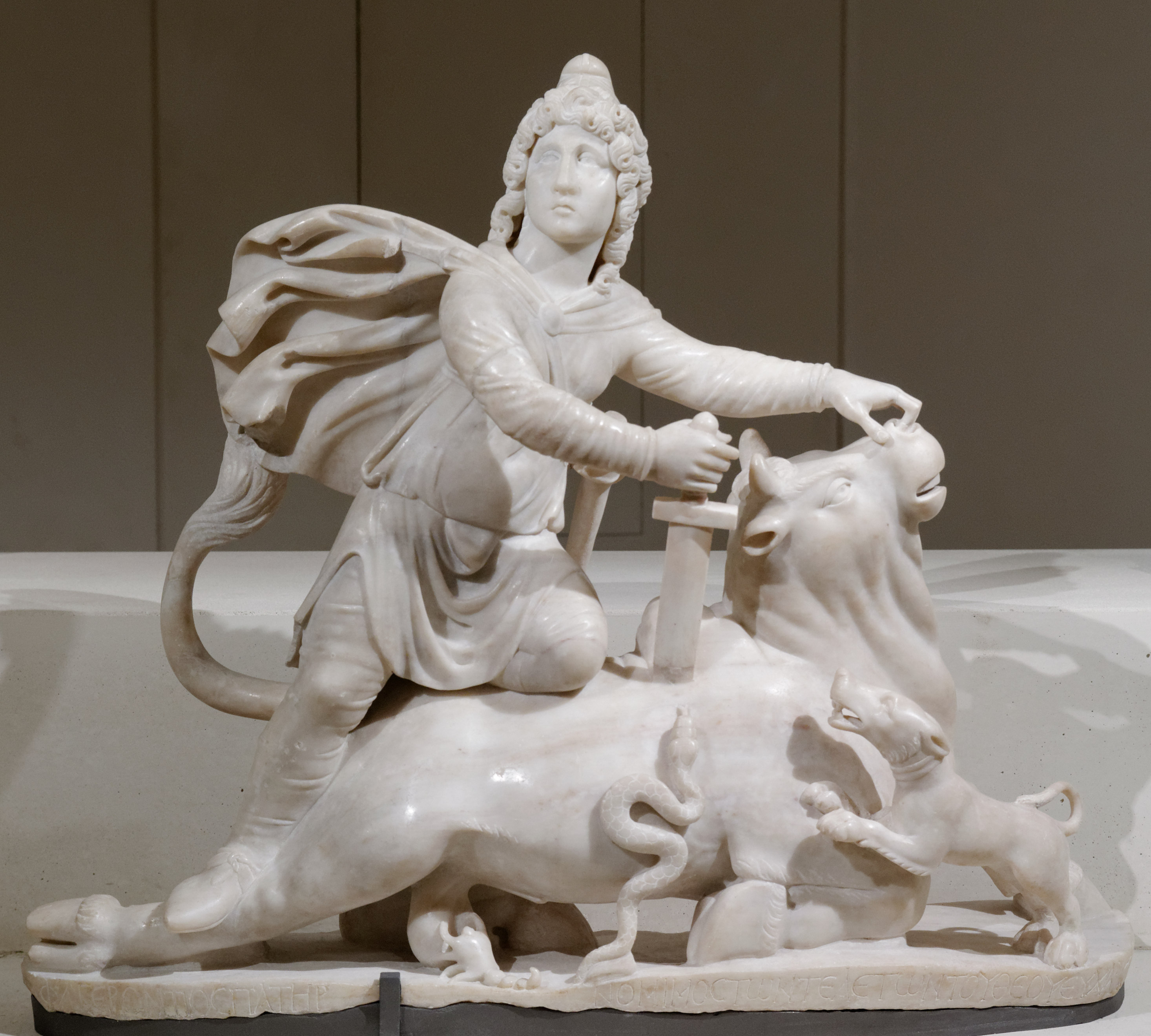
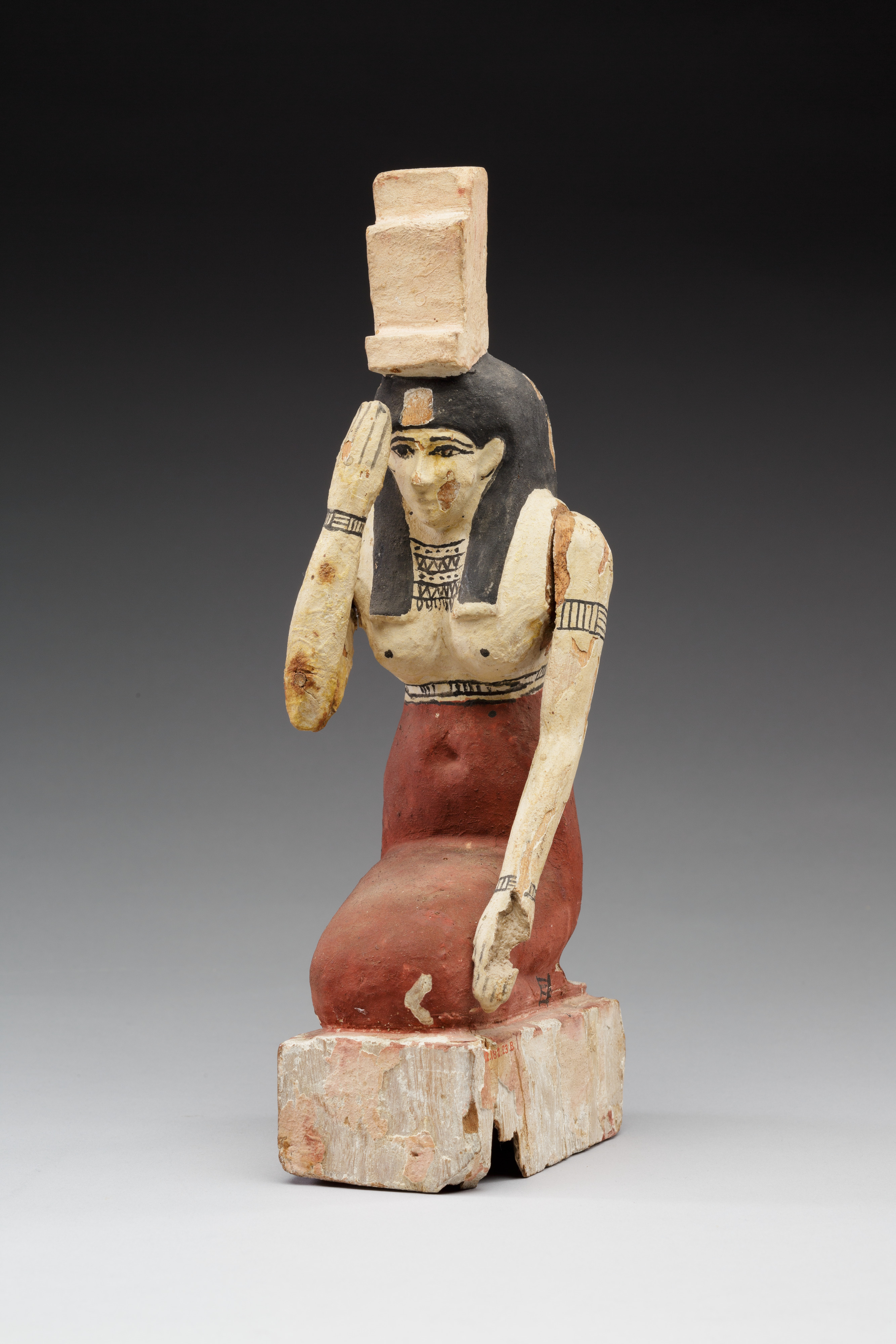
The Eleusinian Mysteries (CON-0090) grew from the myth of Demeter and Persephone. Two aristocratic Athenian families controlled them for nearly two millennia. They were agricultural in their symbolism (grain, the seed that descends into the earth and returns) and their promise was a transformed relationship to death. The Dionysian mysteries involved sparagmos (the tearing apart of a living creature) and omophagia (the eating of raw flesh), ecstatic dissolution of individual identity into the god's presence, and the terrifying possibility that the god might not let you come back. The mysteries of Meter (Cybele) centered on the self-castrated Attis and the taurobolium, the baptism in bull's blood. The Isis mysteries, best documented through Apuleius, involved elaborate costume and ritual drama, multiple levels of initiation, and the experience of death and rebirth through identification with Osiris. The Mithras mysteries were exclusively male, hierarchically organized into seven grades, and practiced in small underground temples that replicated the cosmos.
These are not the same thing. The Eleusinian mystes and the Mithraic pater share the word "initiate" and almost nothing else. Their cosmologies differ. Their social structures differ. Their ritual technologies differ. Their relationships to death differ. Burkert's insistence on maintaining these distinctions is a corrective to two centuries of scholarly conflation, and to the temptation, endemic in the project's own method, to see "initiation" as a single phenomenon with local variations.
The project accepts the correction. And then asks: given these genuine differences, what is it about the structure of initiatory ritual (secrecy, darkness, ordeal, sudden revelation) that produces transformation across such different mythic and social contexts? Burkert shows that the structure is shared. He does not explain why it works.
V. The Skeptic's Gift
Burkert's skepticism is not the skepticism of debunking. He does not claim the mysteries were fraudulent or that the initiates were deluded. He claims something more interesting: that the mysteries operated through comprehensible psychological and social mechanisms, and that the scholar's task is to identify those mechanisms rather than to mystify them.
This is genuinely productive. The inflation that surrounds the mystery traditions, the sense that they contained a secret so deep it could never be spoken, is itself an obstacle to understanding. Burkert cuts through it. The secrecy was, in part, a social mechanism that created group cohesion and marked boundaries. The initiate's change was, in part, the product of ritual technology: sensory deprivation, rhythmic movement, fasting, darkness, sudden light. The promise of a blessed afterlife was, in part, a function of the transactional relationship between initiate and deity: you serve the god, the god protects you in death.
Each of these observations is correct. Each is also incomplete. The social mechanism of secrecy does not explain why the penalty for disclosure was death, a disproportionate response to a mere boundary-marking device. The ritual technology of sensory manipulation does not explain why the experience was described, consistently across centuries, in language that echoes mystical testimony from traditions that used entirely different techniques. The transactional relationship with the deity does not explain why Cicero, a skeptic, a lawyer, a man not given to mystical enthusiasm, said the Mysteries were Athens's greatest gift to civilization.
Burkert provides the skeleton. He identifies the bones and names the joints. What he cannot provide is the life that animated the skeleton, the consciousness that moved through the ritual architecture and was changed by it. The project begins at the point where Burkert's analysis reaches its self-imposed limit. Where Burkert ends, the question of consciousness begins.
VI. Where Burkert Ends
There is a passage near the end of Ancient Mystery Cults where Burkert, for a moment, drops his guard. He is discussing the longevity of the Eleusinian Mysteries, nearly two thousand years of continuous operation, outlasting the Athenian democracy, the Macedonian conquest, and the Roman Republic, surviving until Alaric's Goths destroyed the sanctuary in 396 CE. Why did they last? Burkert's answer: because they met "a basic need of human existence."
He does not specify the need. His method does not equip him to. But the admission is telling. A ritual institution that operates for two millennia, drawing participants from across the social spectrum, surviving regime after regime, does not persist because of social mechanics alone. Something in the experience itself sustained it: something the initiates encountered in the darkness of the Telesterion, something they carried with them afterward, something that made them, as the Homeric Hymn promises, "blessed among mortals."
Burkert gives us everything his discipline can reach. He maps institutional organization alongside ritual mechanics, and reads the comparative data without inflation. He is the most reliable guide available to what the mysteries looked like from outside. The project honors his work by refusing to romanticize what he so carefully describes. And the project exceeds his work by asking the question his method forbids: not what were the mysteries? but what did the mysteries do?
The sober witness sees clearly. He reports what he sees with precision and integrity. He does not pretend to see what lies beyond the firelight. But the initiate who enters the Telesterion does not need a witness. The initiate needs the darkness, the kykeon, the Hierophant's voice, and the sudden, unbearable light. Burkert describes the architecture of the room. The project asks what happens to the one who stands inside it.
Sources: Burkert, Walter. Ancient Mystery Cults. Harvard University Press, 1987. LIB-0343.