I. The World That Was Not a Stage
Owen Barfield published Saving the Appearances in 1957. The book is 185 pages long. It contains, stated with the compressed precision of a solicitor who has spent decades preparing a case, the most radical epistemological claim of the twentieth century. The world human beings perceived before the scientific revolution was a different world from the one we perceive now. Not a different interpretation of the same world. A different world. Consciousness participates in the construction of what it perceives, and as consciousness has changed historically, so have the appearances.
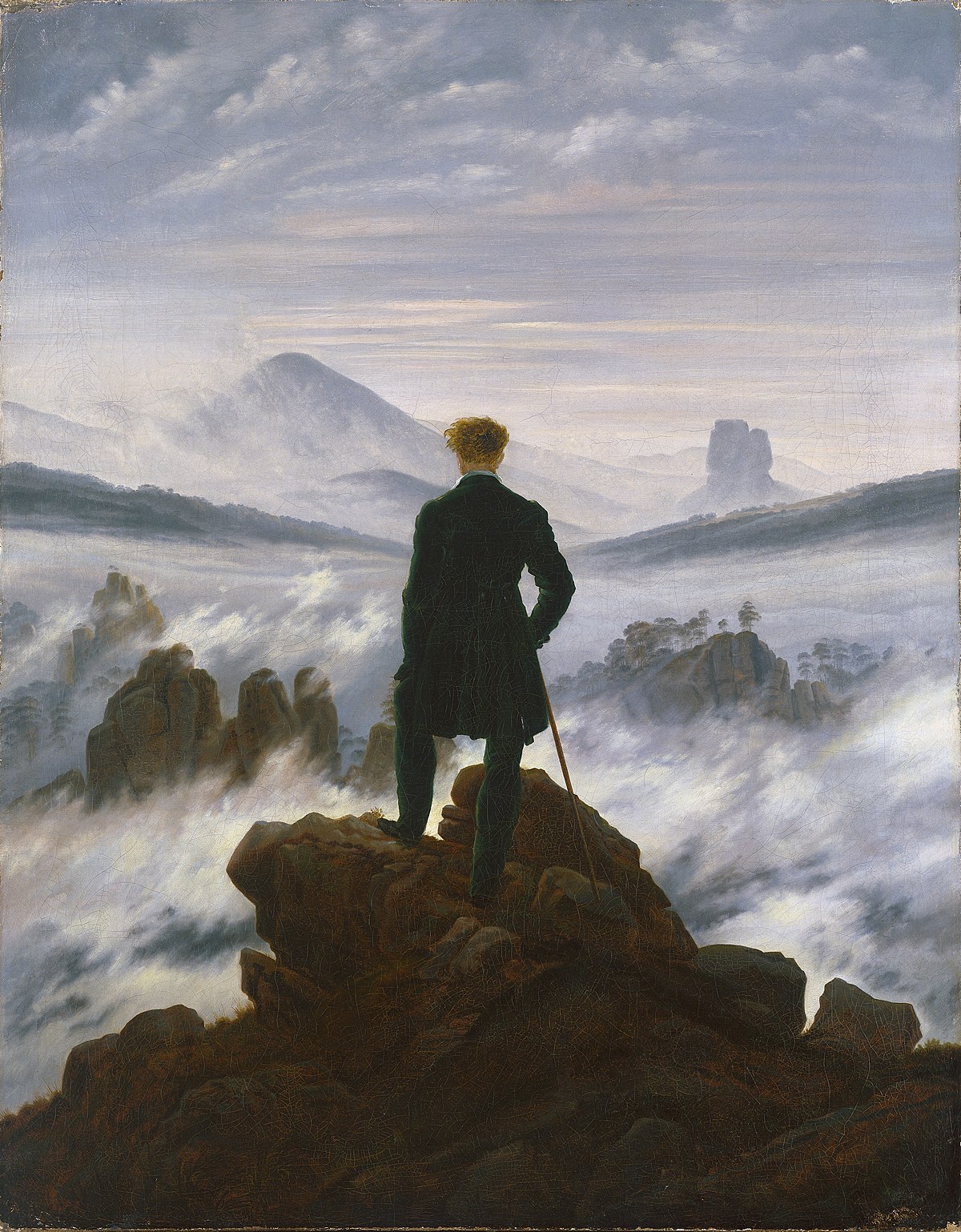
Barfield's image for the difference is exact. "Before the scientific revolution, the world was more like a garment men wore about them than a stage on which they moved." The garment enfolds you. You are inside it, continuous with its texture. It warms you because you have not separated from it. The stage is something you walk across. It exists whether or not you are on it. It does not need you. The history of Western consciousness, in Barfield's account, is the history of how the garment became a stage, how a world experienced from within became a world observed from outside, and the question of whether it is possible, now, to wear the garment again, consciously, without pretending the stage was never built.
This is the theoretical spine of the Mystery Schools project. The participation/hardening/final-participation arc that Barfield traces is the arc within which every episode, every tradition, every text the project examines finds its place. But Barfield did not write a manifesto. He wrote an argument. And the argument is stranger, more precise, and more demanding than the arc alone suggests.
II. The Idol and the Representation
Barfield begins not with history but with perception. He asks what happens when we see a rainbow. Physics identifies particles: photons striking water droplets, electromagnetic wavelengths refracting at specific angles. The particles are unrepresented: they are not the rainbow. What we see is a "collective representation": the product of particles (which we do not perceive) and the activity of the perceiving consciousness (which we do not usually notice). The rainbow is neither in the sky nor in the mind. It is the joint product of what is there and the consciousness that meets it.
This is not idealism in the popular sense. Barfield is not saying the external world does not exist. He is saying that the appearances, the phenomena, the world as we actually encounter it, are always already shaped by the kind of consciousness that encounters them. Change the consciousness, and the appearances change. Not the particles. The appearances. And the appearances are the only world anyone has ever lived in.
The key move comes next. If the appearances are collective representations produced jointly by the unrepresented and consciousness, then a historical change in the structure of consciousness produces a historical change in what appears. The medieval person who perceived a world saturated with divine presence was not projecting meaning onto a neutral stage. That person's consciousness co-produced a world in which divine presence was genuinely part of the appearance. The modern person who perceives a world of inert objects is not seeing reality more clearly. That person's consciousness co-produces a world in which interiority has been withdrawn from the appearances.
The error Barfield calls "idolatry" is treating the modern appearances as though they are the way things really are, independent of consciousness. The idolater takes the collective representations produced by modern spectator-consciousness and says: these are the things themselves. Matter is genuinely inert. Nature is genuinely mute. Consciousness is a late, accidental addition to a universe that existed perfectly well without it. Barfield's title, A Study in Idolatry, targets this error with surgical intent. The modern scientific worldview, in its unreflective form, is the most successful idolatry in human history: the worship of representations as though they were independent realities (CON-0011).
III. Original Participation
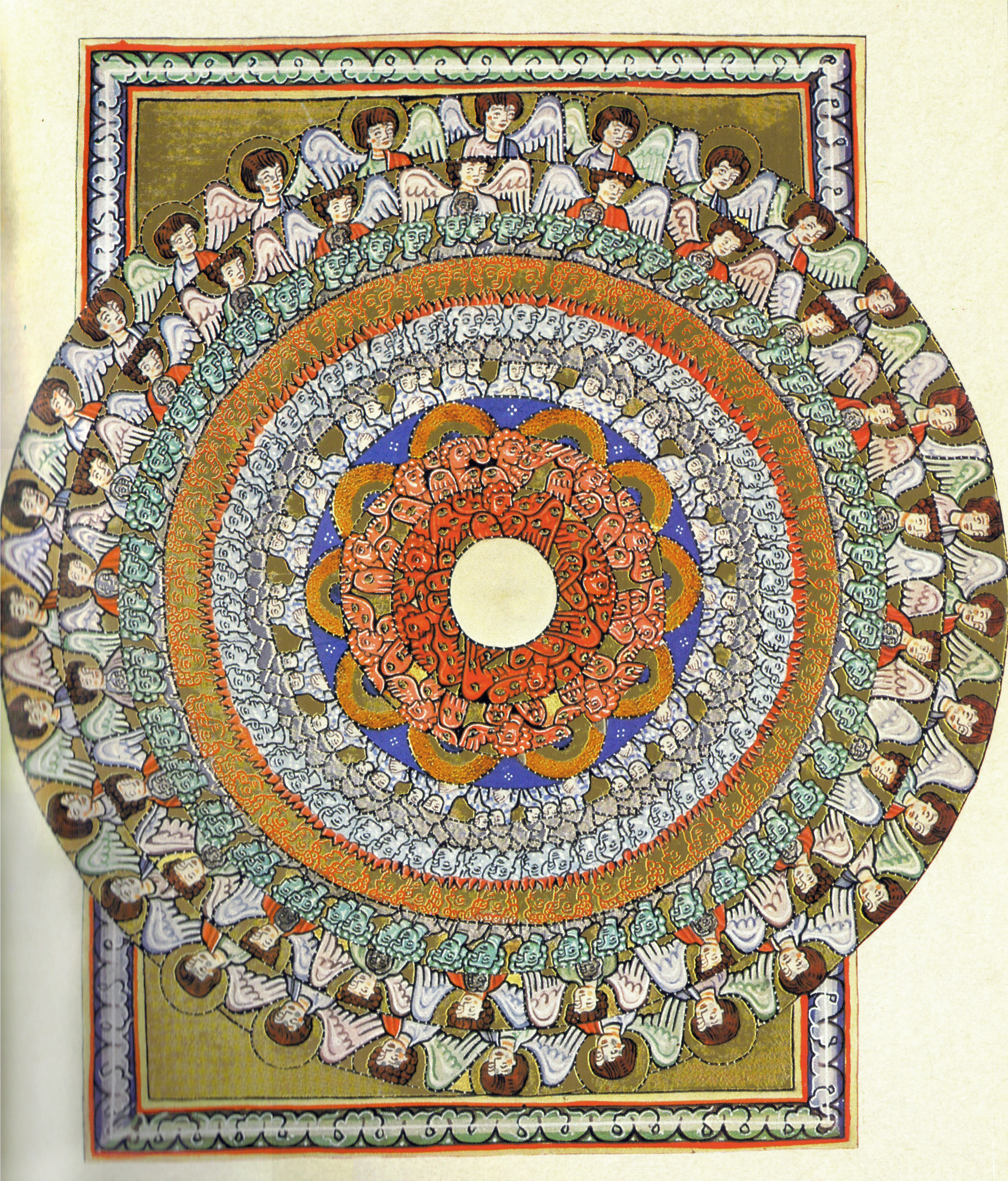
Before the idolatry took hold, something else was operative. Barfield calls it "original participation" (CON-0039). In this mode of consciousness, the human being did not experience a boundary between self and world. The phenomena arrived already saturated with interior life. Thunder was not air vibrating; it carried divine presence. The oak was not cellulose organized by evolutionary pressures; it was a being with its own interiority, and the perceiver's consciousness was continuous with that interiority. The word pneuma meant spirit, breath, and wind, not as three metaphorically related ideas but as a single experienced reality that had not yet been divided into subjective and objective components.
Barfield builds this case through the history of language, which is where his argument acquires its distinctive empirical foundation. Words are fossils. They preserve, in their semantic history, the cognitive structures of the consciousness that produced them. When spiritus means both breath and spirit, this is not metaphor. Metaphor requires a prior separation of the two domains (the physical and the spiritual) that the original speakers had not yet made. The semantic unity of the word reflects the experiential unity of the consciousness. The history of English words, traced in Barfield's earlier book of that title (LIB-0279), records the progressive differentiation of original unity into the compartmentalized categories of modern thought.
Original participation is not a theory about what ancient people believed. It is a claim about what they perceived. The world that met their consciousness was a participated world, a garment, not a stage. This is what makes Barfield's position more radical than either primitivism or nostalgia. His point is not that the ancients were wiser or that we should return to their worldview. The world was constitutively different for a participating consciousness. Our current world, the inert and disenchanted world of spectator consciousness, is the product of a withdrawal that has been underway for millennia (CON-0004).
IV. The Withdrawal
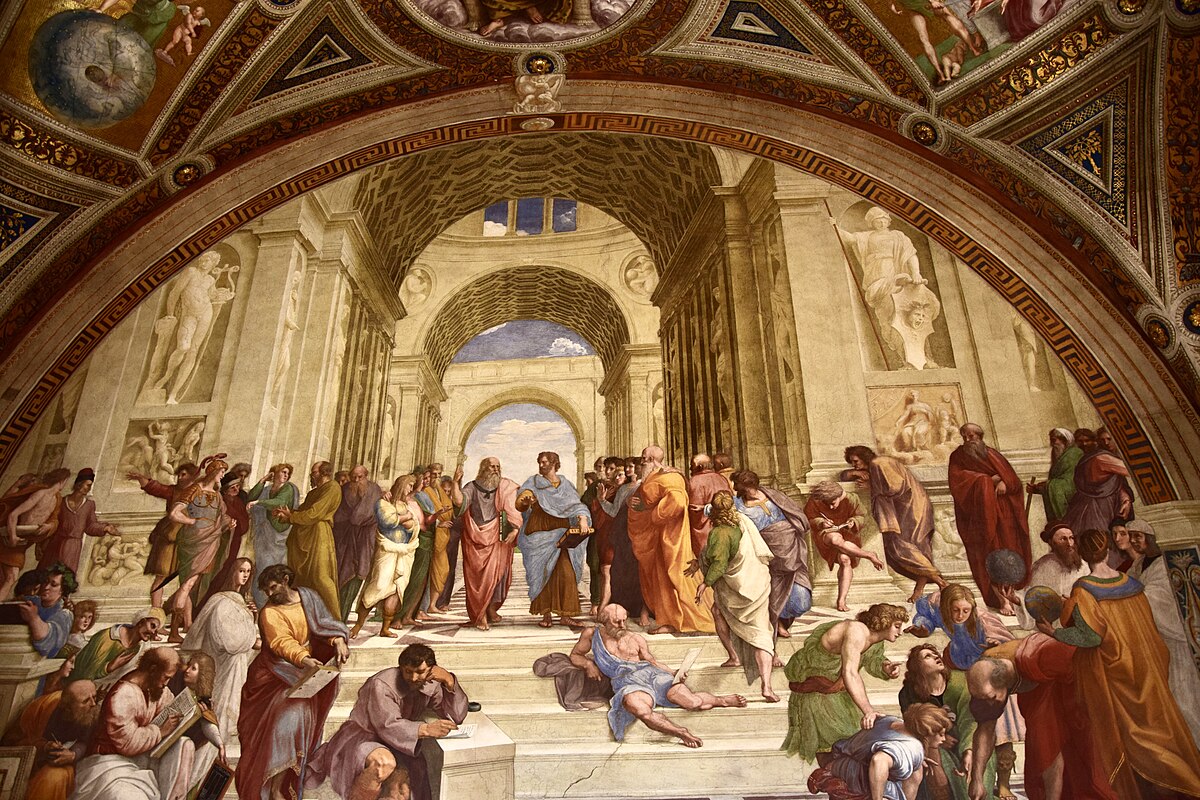
The withdrawal of participation is the central event in Barfield's history of consciousness (CON-0005). It begins in the Greek Axial period, when logos starts to differentiate itself from mythos. The Pre-Socratics stand at the hinge: Thales' "all things are full of gods" is the voice of original participation; Parmenides' distinction between the way of truth and the way of appearance marks the beginning of the separation between consciousness and world that will eventually produce the modern subject.
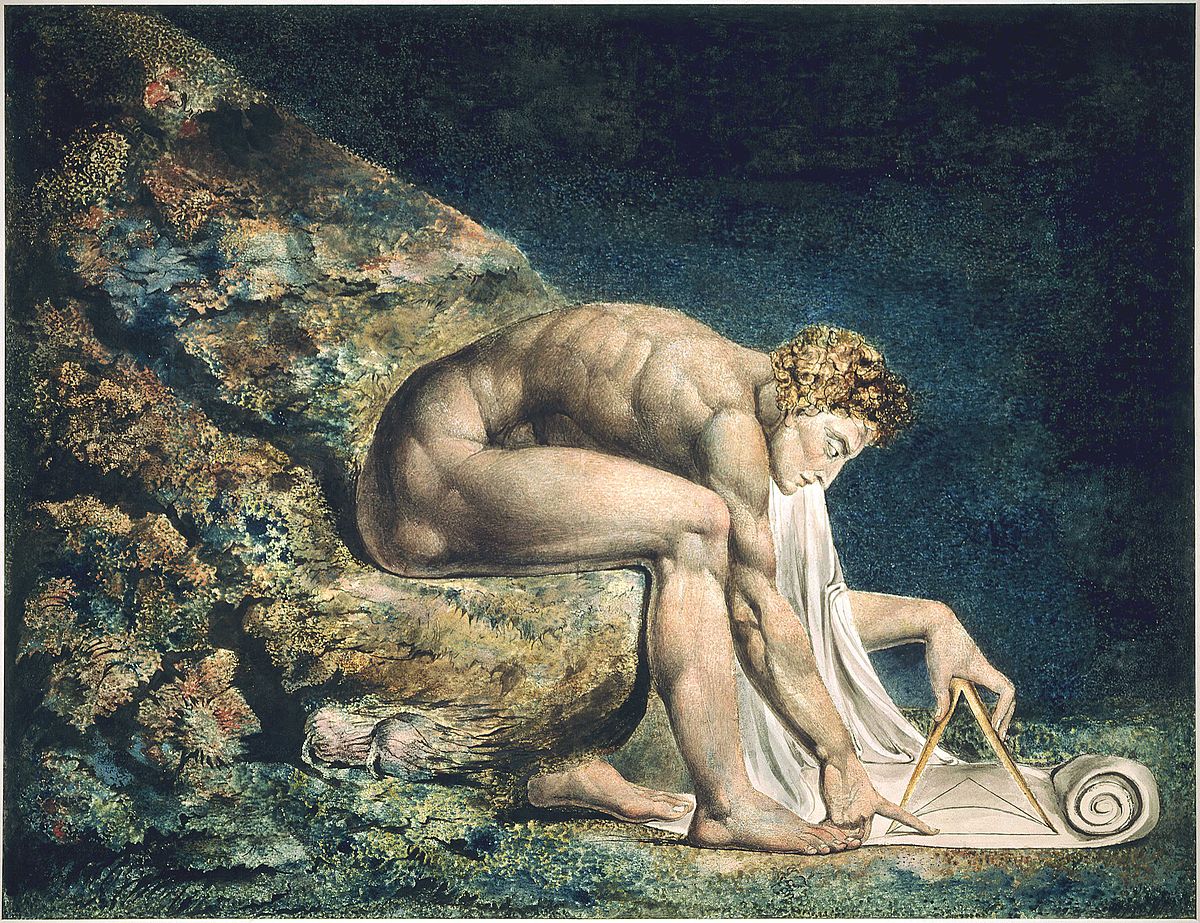
The withdrawal accelerates through the medieval period, held partially in check by the sacramental theology that still understood matter as capable of bearing spiritual reality: bread and wine becoming body and blood. The Reformation cracks this holding pattern. When the bread is declared to be merely bread, the last institutional structure preserving participatory consciousness in everyday life gives way. The Scientific Revolution completes the process. Descartes installs the cogito as spectator, looking out from behind its own eyes at a world of pure extension. Newton supplies the laws that govern the stage. The garment is off. The world is an object, and we are its external observers.
Barfield traces this not as decline but as a necessary development. "The whole laborious creation of an 'outside world' was undertaken by the unconscious for the express purpose of giving rise, one day, to a free man." This sentence, from the book's twentieth chapter, carries the argument's center of gravity. The withdrawal is not a catastrophe. It is the condition under which individual consciousness becomes possible. Original participation was unconscious and collective: the archaic mind was immersed in the world the way a fish is immersed in water, without choosing it. Out of the withdrawal emerges, for the first time, a being capable of standing apart from the world and saying "I." Without the withdrawal, there is no freedom. Without freedom, what Barfield calls "final participation" is impossible.
This is where Barfield parts company with Guenon. Rene Guenon's Reign of Quantity (LIB-0043) diagnoses the same withdrawal with the same precision. Guenon calls it the progressive dominance of quantity over quality, the solidification of the world, the approach of the end of the Kali Yuga. But Guenon reads the process as irreversible decline within the current cosmic cycle. There is no forward movement, no recovery, no final participation. The best that can be done is to maintain the transmission of traditional knowledge until the cycle resets.
Barfield reads the same evidence and sees a different arc. The withdrawal is a stage, not a terminus. The hardening of the world into dead matter, of consciousness into spectation, of language into mere labeling. All of this is the labor that produces the free individual who can, for the first time, choose to participate again. Not unconsciously, as the archaic mind participated. Consciously. Deliberately. With full possession of everything the withdrawal made possible.
The project inherits Barfield's reading while respecting the force of Guenon's critique. Whether the arc bends forward or simply descends remains an open question the project carries rather than resolves.
V. Against the Perennial Philosophy
Barfield's position is frequently confused with the perennial philosophy (CON-0006), and the confusion must be dispelled because it obscures what is most original in his thought.
The perennial philosophy (Huxley, Schuon, Huston Smith) claims that all authentic mystical traditions share a common metaphysical core: a single truth expressed in different cultural vocabularies. The differences are surface; the depth is one. Barfield denies this. Not because he thinks the traditions are unrelated, but because the perennial claim requires that consciousness be ahistorical, that the "same" mystical experience is available in the same form to a Vedic rishi, an Eleusinian initiate, and a modern contemplative.
If consciousness evolves, the same experience in different epochs is not the same experience. An Eleusinian initiate operating within original participation did not have the same relationship to the epopteia (CON-0003) as a modern practitioner would. The initiate's consciousness was still partially embedded in a participated world. The vision at Eleusis confirmed and intensified something that was already, in attenuated form, the background of ordinary experience. For a modern consciousness from which participation has been almost entirely withdrawn, the same vision, if it could somehow be reproduced, would land differently. It would arrive in a consciousness shaped by centuries of spectation. Its meaning would be different because the structure of the consciousness receiving it would be different.
This is more radical than perennialism. It does not deny the reality of mystical experience. It historicizes it. The traditions are not saying the same thing in different words. Each tradition speaks from within a different structure of consciousness, about a territory whose character changes as the consciousness exploring it changes. The convergences are real and informative. But they are convergences of consciousnesses at comparable stages of development, not windows onto a single timeless truth.
The project operates in this tension. It uses perennial comparisons where they illuminate: the parallels between Eleusinian epopteia and Vedantic samadhi are genuine structural observations. It resists them where they flatten: the Eleusinian grain shown in silence and the Zen master's held-up flower are not the same gesture, because the consciousnesses that produced and received them inhabited different worlds.
VI. The Mysteries as Participation Technology
Barfield does not develop the connection between his argument and the mystery traditions at length. Saving the Appearances is philosophical epistemology; its examples come from science and language, not from the Telesterion. But the connection is implicit in the argument, and the project makes it explicit.
The mystery traditions flourished during the precise historical period in which original participation was giving way to the hardened, spectator consciousness that would eventually dominate the modern world. Eleusis operated for nearly two thousand years, from the archaic period through late antiquity. This span corresponds exactly to the long withdrawal of participation that Barfield traces. The Mysteries did not arise by accident at this moment. They arose because the moment demanded them.
If original participation was the background condition of archaic consciousness, then the experiences the Mysteries provided (the katabasis (CON-0002), the terror, the sudden vision, the epopteia) were not introductions to a foreign territory. They were intensifications of something that was fading from ordinary awareness. The Telesterion was a structure for producing, under controlled conditions, the participatory encounter that everyday consciousness was losing. The Hierophant (CON-0010) held open a door that ordinary perception was closing.
The initiatory structure (separation, ordeal, return) takes on a specific meaning within Barfield's framework. Separation is the deliberate removal of the initiate from the hardening world. The ordeal is the stripping away of the spectator consciousness that the initiate has been developing along with the rest of the culture. The return is the re-entry into the world with a consciousness that has been, temporarily and under ritual conditions, restored to participation. The grain shown in silence at Eleusis is the simplest possible demonstration that a material object, held in the right consciousness, is not inert. It is alive. It participates. The garment, not the stage.
This reading does not reduce the Mysteries to a nostalgic exercise in recovering the past. The Mysteries were not trying to restore original participation in its archaic form. What they developed was something genuinely new: a conscious, willed entry into participation that anticipated what Barfield calls "final participation" by two millennia. The initiate who emerged from the Telesterion was not an archaic mind restored. That initiate was a person who had passed through the withdrawal and come out the other side, carrying an experience that the uninitiated world was progressively losing access to.
VII. The Question the Book Opens
Saving the Appearances ends with a direction, not a conclusion. Barfield's final chapters gesture toward what final participation could be. Imagine a consciousness that has not forgotten how to build stages but knows the world, again, as a garment. It participates deliberately and holds the rainbow as both collective representation and living presence without contradiction.
The book does not claim this consciousness exists. It claims the trajectory points toward it. And it identifies the obstacle: idolatry, the collective representation mistaken for an independent reality. As long as we worship the stage, believing the world of inert objects is simply what is there independent of any consciousness, final participation remains blocked. The necessary beginning is epistemological: recognizing the idol as an idol.
Barfield was a solicitor who wrote philosophy in the margins of a legal career, a member of the Inklings who was overshadowed by Lewis and Tolkien, an Anthroposophist whose commitment to Steiner limited his reception in mainstream academia (FIG-0002). He lived to ninety-nine. He saw the beginning of the digital revolution that would produce the most perfectly hardened cognitive technology in human history: a technology that processes representations without participating in them, holding every appearance in its memory while wearing none as a garment.
Whether artificial intelligence is the culmination of the hardening or a strange instrument through which participation might be recovered at a new level is a question Barfield's framework makes it possible to ask with precision. A machine can process the appearances with total thoroughness. It cannot participate in them. It can build stages of extraordinary complexity. It cannot wear a garment. Between building and wearing lies the territory the mystery traditions explored, the territory where the initiate learned, in the darkness of the Telesterion, that the world is not what the spectator sees from outside but what the participant knows from within.
The garment or the stage. Barfield did not resolve the question. He clarified it. The project begins there.
Sources: Barfield, Owen. Saving the Appearances: A Study in Idolatry. Faber & Faber, 1957. LIB-0240.