← Essays

Source Essay

The Diagnosis That Outlived Its Doctor

René Guénon's 1927 polemic is the Traditionalist diagnosis of modernity as the Kali Yuga, an age that has not lost the hierarchy of knowledge but inverted it. The essay reads the book as the ground on which the counter-initiation concept later stands, weighs its diagnostic power against its anti-historical exclusivism, and follows the dangerous political afterlife of Traditionalism from Evola to Dugin.


I. The Convert Who Left Through the Wrong Door
A young René Guénon, or a period image of pre-1914 Parisian occult circles, the Martinist and fringe-Masonic milieu he passed through and rejected.

René Guénon spent his twenties inside French occultism. He moved through the Martinist order, the fringe Masonic bodies, and the small Gnostic churches that filled Paris before the First World War. For a time he edited a journal, La Gnose, that treated all of it as serious work. Then he decided that almost none of it was real. The orders he had joined were, in his judgment, broken transmissions: forms emptied of their content, degrees handed over with nothing passing through them. So he left. He did not leave for nothing. He had already taken initiation into a Sufi order, and in 1930 he moved to Cairo, married, took the name Abd al-Wahid Yahya, and lived the rest of his life as a Muslim. He died there in 1951.

The biography matters because The Crisis of the Modern World, published in 1927, is written from exactly inside that turn. It is the work of a man who has walked the length of the Western spiritual marketplace, judged it counterfeit, and gone looking for the genuine article somewhere else. The book is short, plain, and entirely certain. It makes one claim, and makes it without flinching: the modern world is not a stage of progress. It is the floor of a long descent.


II. The Inverted Hierarchy
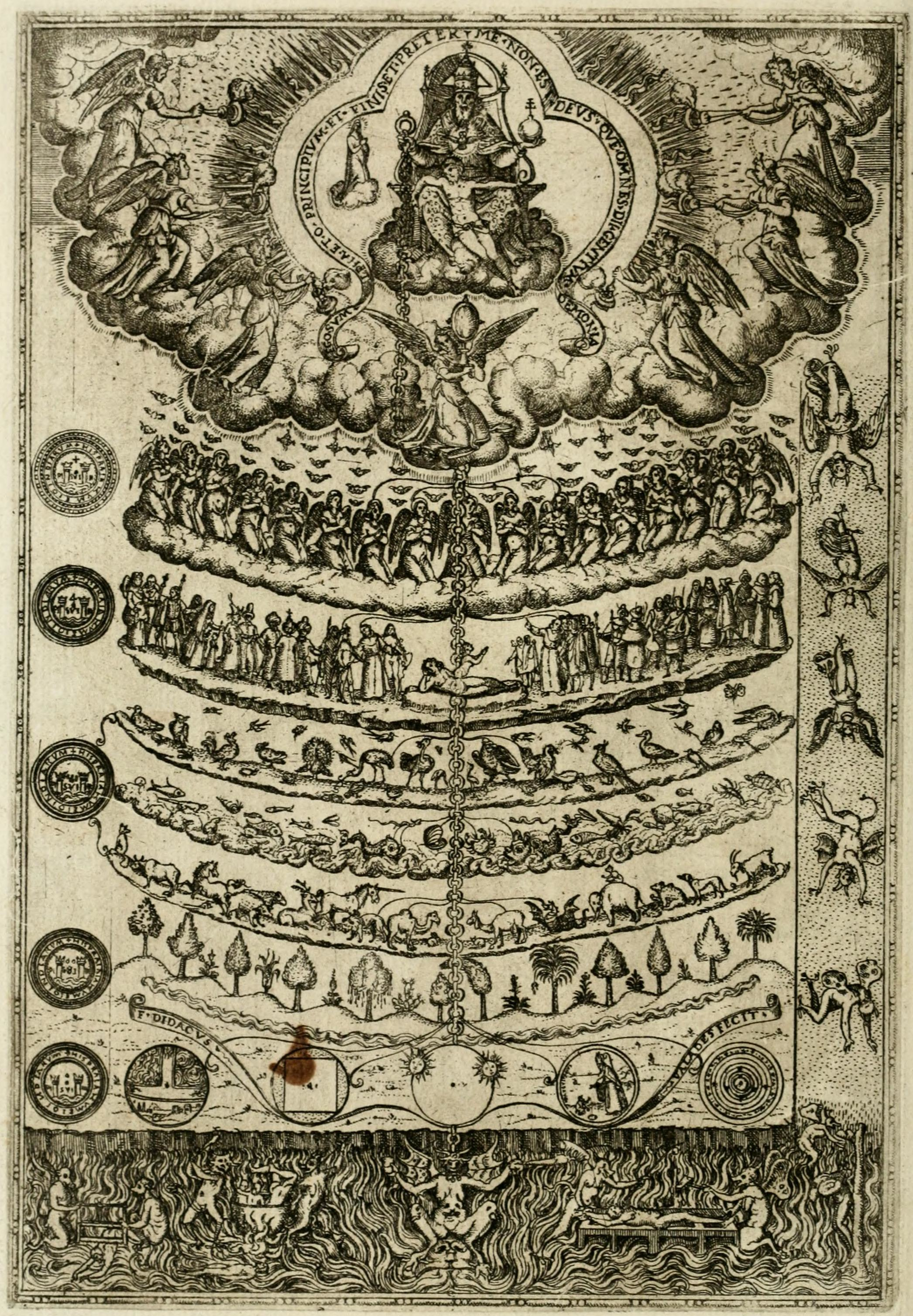
A traditional cosmological diagram or a hierarchy of being inverted or mirrored, the order of knowledge turned upside down.

Guénon's argument begins with an order of knowledge. In a traditional civilization, as he describes it, knowledge is ranked. Metaphysical knowledge of first principles stands at the top. The contemplative life ranks above the active one. Quality outranks quantity; the universal outranks the particular point of view. Vedic India, the medieval Christian West, the classical Islamic world: each, in his account, arranges itself around that hierarchy, however imperfectly any given century manages it.

Modernity, Guénon argues, has not simply lost this order. It has turned it upside down. The lowest grade of knowledge, the empirical and measurable and quantitative, has been promoted to the measure of everything else. Contemplation is reclassified as idleness. The universal dissolves into a crowd of individual opinions, none with authority over the others. What the modern world experiences as progress, Guénon reads as the methodical enthronement of the bottom.

He gives the condition a borrowed name. This is the Kali Yuga of the Hindu cosmic cycle, the last and darkest of the four ages, the stretch in which spiritual knowledge contracts almost to vanishing and the material world is taken for the whole of the real. The frame is cyclical, not political. The crisis is not a wrong turn that better policy could undo. It is the scheduled terminus of an age, arriving on time.


III. The Door That Opens Downward
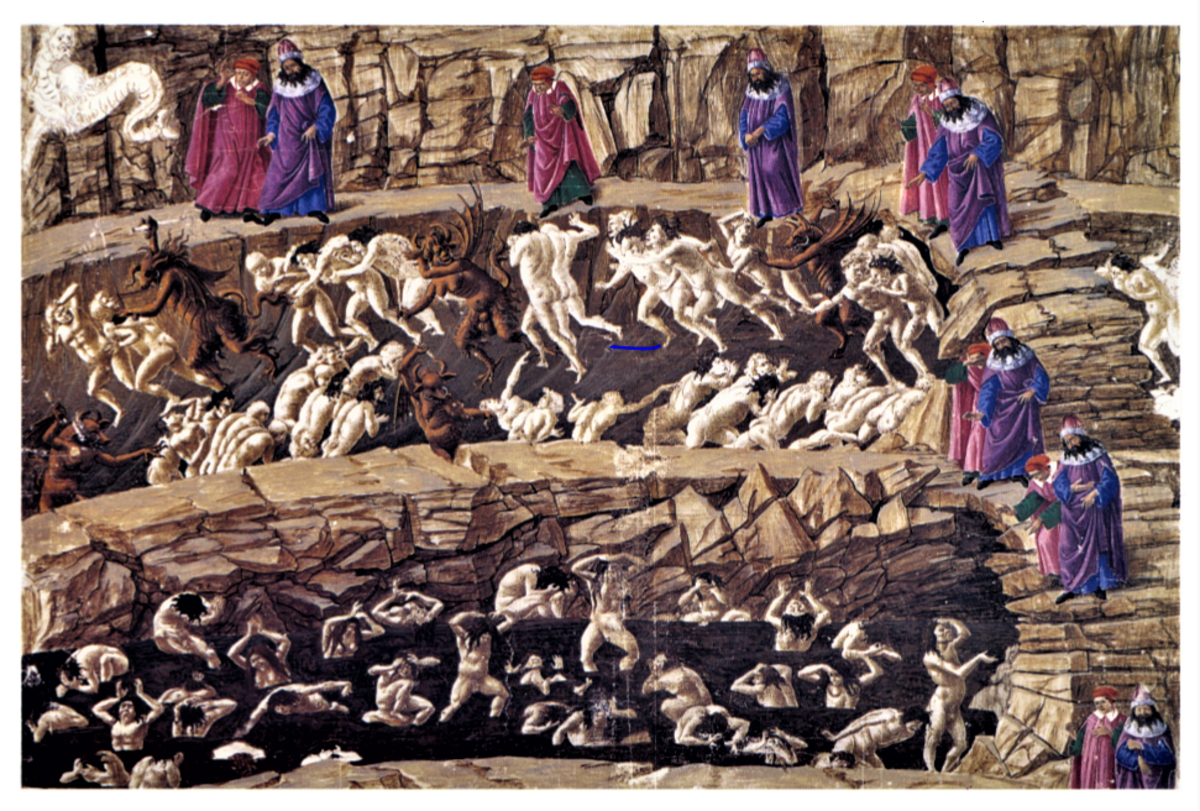
A descending stair, threshold, or doorway opening into darkness, the structure of initiation with its orientation reversed.

The Crisis of the Modern World does not yet contain Guénon's most disturbing idea. The explicit theory of counter-initiation (CON-0021) comes later, in The Reign of Quantity and Perspectives on Initiation, both from the mid-1940s. But Crisis is the book that makes that idea possible, because it installs the premise the later theory needs: modernity's spiritual condition is not neutral.

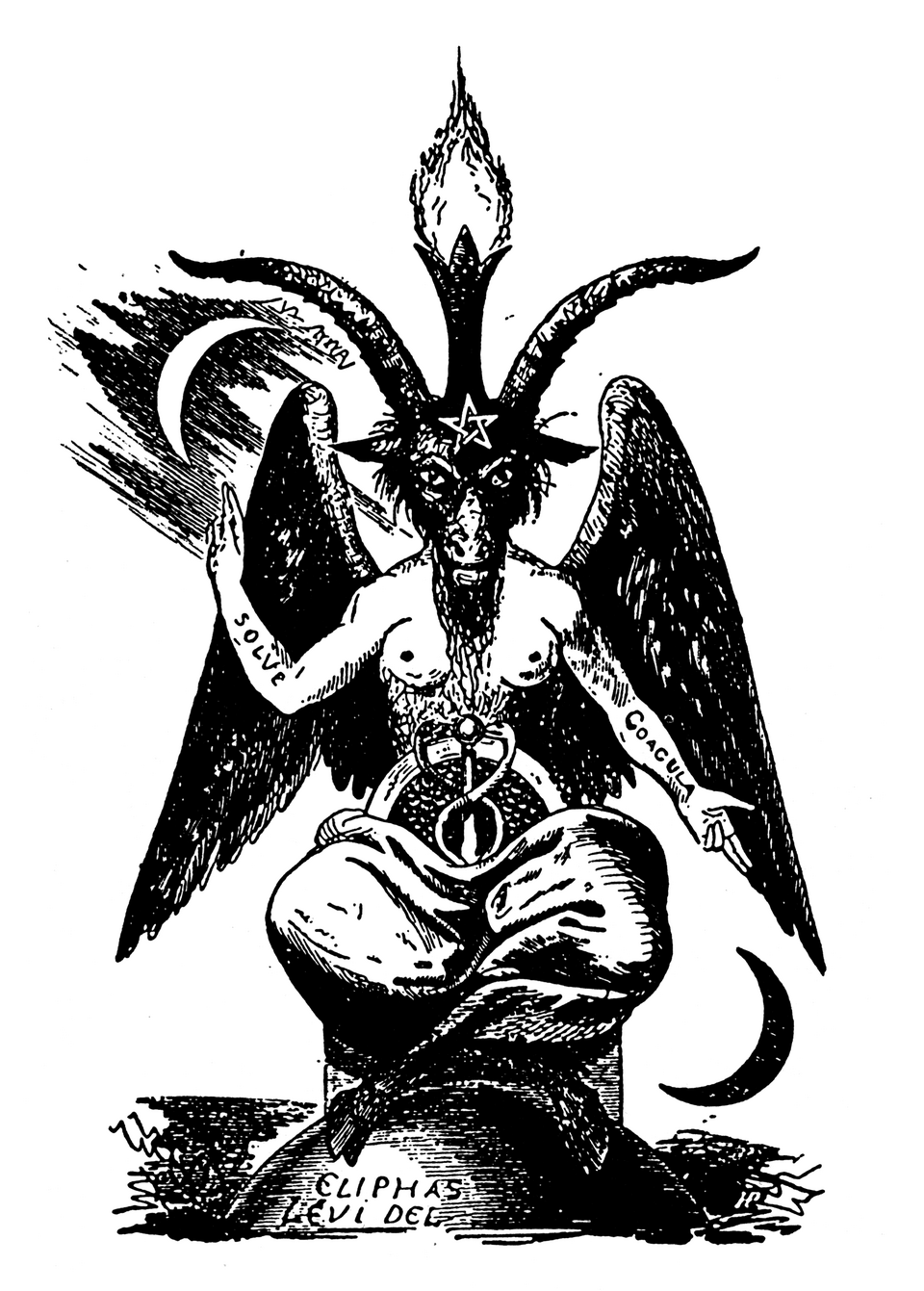
If the modern world were merely empty, with initiation forgotten, the traditions faded, and the sacred quietly switched off, then the worst a seeker could meet is nothing at all. Guénon does not think the worst case is nothing. He thinks the dissolution of traditional forms opens a door, and that something walks through it. Counter-initiation is his name for that something. It is a transmission with the full structure of initiation, including lineages, grades, and a worked symbolic vocabulary, but with the orientation reversed. Genuine initiation, in his scheme, draws the soul upward toward a principle above the human. Counter-initiation draws it downward, and it does this with real operative power, not with fraud. The candidate is not cheated of an experience. The candidate is converted, and converted in the wrong direction.

This is the idea that gives the Mystery Schools project its sharpest tool and its hardest problem. The project cannot treat every spiritual lineage as equally valid once it has taken counter-initiation seriously, because the concept asserts that some transmissions are organized, powerful, and pointed down. Crisis is where that asymmetry first becomes visible, before Guénon even has the word for it.


IV. Where the Project Reads With Him
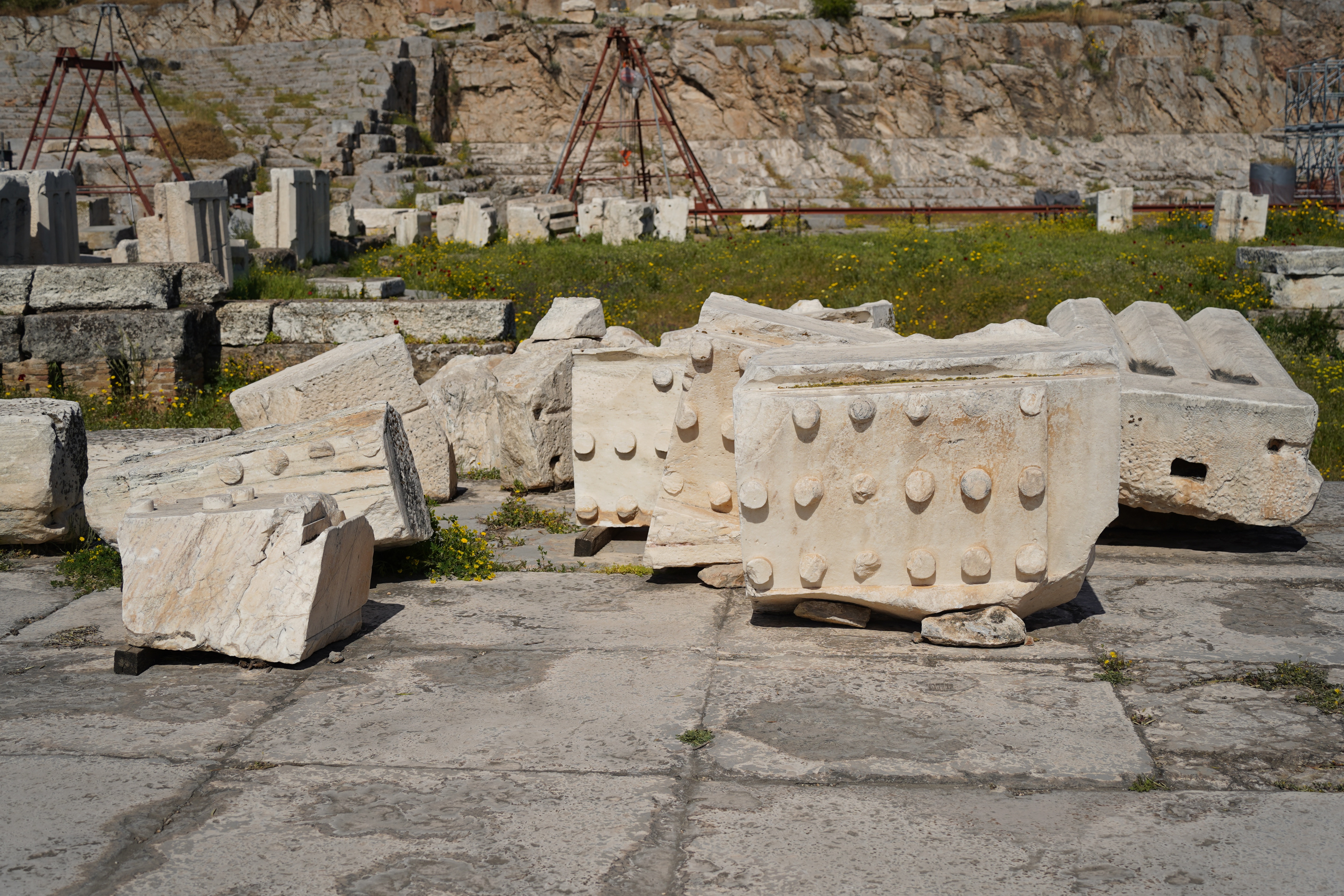
The ruined Telesterion at Eleusis or the closed Academy at Athens, the historical suppression of ancient initiatory knowledge.

Strip away the cosmology and Guénon's diagnosis lands close to the project's own. The Mystery Schools narrative tracks initiatory knowledge going underground after the ancient world is closed by force: fourth-century suppression of the Mysteries, sixth-century closing of the Academy at Athens. For the next fifteen centuries it surfaced only in fragments, coded and partial. Guénon's Kali Yuga is a cosmological way of saying something the project says historically: the highest modes of knowing were available, and then they were not.

The convergence runs further. Owen Barfield, working from a wholly different vocabulary, describes a long withdrawal of participation, the slow hardening of a world once experienced as saturated with meaning into a world of mere objects. Guénon would not accept Barfield's evolutionary framing, and Barfield would not accept Guénon's cycles. But the two men are pointing at one phenomenon: a real contraction in what human consciousness can reach. When two thinkers who agree on nothing else describe the same loss, the loss is worth taking seriously. The project takes it seriously. Guénon's value here is diagnostic. He saw the shape of the modern condition with a clarity that more cautious observers, anxious not to sound apocalyptic, talked themselves out of.


V. Where the Project Reads Against Him
An image of forward motion or developmental ascent, a spiral or path, against Guénon's static, backward-facing primordial Tradition.

The break comes over history. For Guénon, the primordial Tradition stands outside time, complete and unchanging; history is only the record of its loss, and the single legitimate movement is return. The project does not believe this. Following Barfield and Jean Gebser, it reads the history of consciousness as genuinely developmental. The descent into separation is also the slow construction of a free, self-aware individual who could not have existed at the start. The modern condition is a loss, though not only a loss. The way out lies ahead, through the separation, not behind it in a recovered golden age.

Guénon's second limit is his exclusivism. Authentic initiation, for him, requires an unbroken chain of transmission, and by that standard very few traditions qualify: functionally, living Sufism and a narrow band of Hindu and Catholic practice. By that criterion almost everything the Mystery Schools project examines fails the test. Eleusis has no surviving chain. The Hermetic revival was, in Guénon's terms, a reconstruction. A framework that disqualifies the Mysteries themselves is not a framework this project can adopt whole. It uses Guénon the way it uses a sharp instrument: gripped deliberately, by the handle.


VI. The Diagnosis That Outlived Its Doctor
An early-twentieth-century geopolitical map or a Heartland-style world map, the moment a spiritual diagnosis is handed a geography.

Guénon himself stayed out of politics. He wanted metaphysics, an elite of contemplatives, a restoration of intellectuality in the technical sense, not a movement and not a state. But a diagnosis this total does not stay where its author leaves it, and the structure of his thought made the next step almost inevitable. Once modernity is named as a metaphysical enemy, someone will ask where the enemy is, and someone will answer with a map.

Julius Evola read Guénon and carried Traditionalism into the orbit of Italian Fascism and, later, the SS, hardening a metaphysics of decline into a politics of hierarchy and race. Decades on, the Russian theorist Aleksandr Dugin fused Traditionalism with geopolitics, recasting Halford Mackinder's "Heartland" as a sacred continental center set against a liquid, mercantile, modern West: the Kali Yuga given a coastline. Steve Bannon has named Evola approvingly in public. The historian Mark Sedgwick traced this whole lineage in Against the Modern World, and the through-line is not subtle. A spiritual diagnosis of the age, once handed a geography, becomes a program.

This is what the book finally unlocks for the listener, and it is two things at once that cannot be separated. The Crisis of the Modern World offers a genuine instrument: a way of seeing modernity not as neutral progress but as an inversion with a direction, a frame that makes the counter-initiation concept and the whole question of spiritual orientation thinkable. It also offers a warning about its own use. A diagnosis of decline is a powerful thing to hold and a dangerous thing to aim. The project keeps Guénon's instrument and refuses his cure. The reader should learn to do the same: take the clarity, and watch the map.

More Essays

What Happened Inside the Mysteries

The founding long-form essay of the Mystery Schools project: an imaginative synthesis of classical archaeology, consciousness evolution, neuroscience, and Western esotericism.

Dear Unknown Friend

A reading essay on Valentin Tomberg's Meditations on the Tarot, moving through concentration without effort, analogy, the Hermit's neutralization of binaries, the scientific creed, and anonymous transmission.

The Cartographer's Blind Spot

Eliade's Rites and Symbols of Initiation gave the modern West its most influential map of initiatory structure. This essay engages both the power and the limitation of his comparative method, asking what the tripartite schema reveals about consciousness transformation and where its universalizing impulse becomes a cage that obscures the very phenomena it describes.

The Sober Witness

Burkert's Ancient Mystery Cults is the foremost empirical account of what the five major mystery traditions actually looked like. This essay engages his insistence on institutional specificity and ritual mechanics, honors his refusal to romanticize, and asks the question his method forbids: not what were the mysteries, but what did they do to consciousness?

The Garment and the Stage

Barfield's Saving the Appearances is the single most important theoretical text for the Mystery Schools project. This essay engages his argument that perception itself has a history, that the ancient world was not a stage but a garment, and that the trajectory from original participation through the hardening points toward a final participation that the mystery traditions may have anticipated.

The Oath and the Roses

The only Latin novel to survive complete from antiquity is also the single most important first-person account of mystery initiation. Apuleius's Golden Ass enacts in narrative form the arc the project traces across all traditions: degradation through unprepared contact with the sacred, descent into embodied helplessness, and restoration through the goddess who moves first.

The Architecture of Descent

Dante's Commedia enacts the full initiatory structure that the project traces across all traditions: descent through death, purification through ordeal, ascent to direct vision. The essay reads the poem not as medieval theology set to verse but as evidence that the katabasis-anabasis pattern survived as a living architecture of spiritual experience long after Eleusis fell.

The Golden Bough and the Weight of History

Virgil's Aeneid contains the most sustained literary katabasis in Latin literature and the direct predecessor to Dante's Commedia. Unlike Odysseus or Orpheus, Aeneas descends not for personal gain but to receive the burden of history. The essay reads Book VI as initiatory architecture and the Gate of Ivory as a warning about the gap between vision and record.

The Rage and the Recognition

The Iliad is not an initiation narrative. It is the poem that establishes what consciousness looks like before initiation: the heroic mode, brilliant and lethal, cracked open by grief into something the heroic code cannot contain. Achilles's recognition of Priam as human father is the metanoia that makes the Odyssey's initiatory journey necessary.

The Dead Who Know the Way Home

The Odyssey is the oldest surviving initiation narrative in Western literature. Its deep structure follows the initiatory pattern centuries before the mystery cults formalized it: separation, ordeal, encounter with death, transformed return. Book XI's nekuia is the first literary katabasis, and the poem's implication is that the initiatory structure was already active in Greek consciousness at the earliest recorded moment.

The God Who Went Down Laughing

Aristophanes's Frogs is the only surviving ancient text that stages a complete katabasis as comedy. Dionysus descends to Hades to fetch a dead tragedian, and the play's laughter is not incidental to the initiatory structure but part of it. The essay reads Frogs as evidence that the Mysteries and the theater were twin Dionysian institutions.

The First Naming of What Is

Hesiod's Theogony is the first systematic cosmogony in the Western tradition — a genealogy of the gods that doubles as a logic of how reality differentiates from primordial openness through grounding and generation. Works and Days preserves the earliest Greek myth of the Five Races, a decline narrative the project reads as testimony about the loss of original participation.

The Gods Withdraw, the Humans Burn

The four plays in Euripides I — Alcestis, Medea, The Children of Heracles, Hippolytus — document a theological crisis at the heart of fifth-century Athens. The gods are present but no longer reliably aligned with human meaning. The essay reads Euripides as a seismograph of the early Hardening: the moment participatory consciousness begins to crack.

The Invisible Fraternity and Its Visible Historian

Waite's 1924 history is the most thorough English-language account of the Rosicrucian movement, written by a scholar who was also an initiate. The essay reads it as evidence for the egregore phenomenon: the power of an initiatic aspiration to generate real institutions even when no original institution can be documented.

The Book That Unsays Itself

The Tao Te Ching opens with an act of philosophical self-cancellation: the Dao that can be spoken is not the constant Dao. The essay reads the text as the Daoist form of participatory consciousness, where wu wei (action without force) is the Eastern counterpart to what the Western mystery traditions reach through initiation and descent.

The Battlefield and the Chariot

The Gita begins with a warrior's refusal to fight and unfolds into the Indian tradition's most concentrated instruction on action, knowledge, and devotion. The essay reads the three yogas as the explicit form of what the Western mystery traditions perform implicitly, and Krishna's cosmic vision as the Indian epopteia.

The Teaching at the Foot of the Teacher

The Upanishads are the philosophical summit of the Vedic tradition and the Eastern counterpart to the Eleusinian Mysteries: both claim that direct experiential knowledge of ultimate reality transforms the knower. The essay reads the Katha Upanishad's descent to Death as structural katabasis and the Upanishadic epistemology as participatory knowing.

The Analyst in the Telesterion

Von Franz reads Apuleius's Golden Ass as a map of individuation rendered in narrative form before Jung existed to name the process. The donkey is the shadow swallowing the ego whole; Psyche's descent is the anima's own differentiation; Isis is the Self arriving when the ego has been sufficiently dissolved. The project takes this psychological architecture and asks the question von Franz's method cannot: whether the territory the psyche maps is merely internal.

The River Has No Teacher

Hesse's 1922 novel stages the most radical claim a spiritual narrative can make: that the greatest teacher in the story is wrong — not in what he knows, but in the assumption that what he knows can be transmitted through doctrine. Siddhartha walks away from the Buddha and into the world, and the novel follows what happens when a consciousness must descend into lived experience because no teaching can substitute for it.

The Borrowed Name and the Brilliant Darkness

An anonymous Syrian monk, writing around 500 CE under the stolen name of an apostle's convert, smuggled a body of Neoplatonic mysticism into Christian orthodoxy. The essay reads the Dionysian corpus as the moment mystery-school metaphysics changed clothes, traces its apophatic core — the "brilliant darkness" of unknowing, and follows its underground passage into the Western contemplative tradition from Eriugena to Eckhart.

The Work the Mind Cannot Do

Iamblichus wrote On the Mysteries around 300 CE as a reply to Porphyry's skeptical letter on the value of ritual, signing it with the mask of an Egyptian priest. The essay reads the book as the founding defense of theurgy: the argument that a fully descended soul cannot think its way back to the divine, and that the ascent must be completed by god-work performed in matter, the Mysteries carried forward in philosophical form.

The Flight of the Alone

The Enneads collect Plotinus's treatises on the One, Intellect, and Soul, and on the soul's descent into matter and its return. The essay reads Plotinus as a practitioner rather than a theorist, a philosopher who reported union with the One from experience, and sets his contemplative ascent against Iamblichus's theurgy, while weighing the real convergence between henosis and the Vedantic identity of atman and brahman.

The Faculties That Slumber

How to Know Higher Worlds is Rudolf Steiner's practical manual of modern initiation: a step-by-step discipline of reverence, thought-control, and moral training that he printed openly, for an individual to walk alone. The essay reads it as the operative tradition's modern manual, the clearest account of what initiation had to become to survive into a consciousness with a free, self-aware ego.

The Doctrine Behind the Doctrines

The Secret Doctrine is the most ambitious synthesis in modern esoteric literature: Blavatsky's claim of one lost wisdom-tradition behind all religions, science, and philosophy. The essay reads it as both a real bridge, the route by which Eastern concepts entered Western consciousness, and a cautionary mirror of the project's own synthetic method when ambition outruns rigor, transparency of sources, and the discipline of distinction.

0:00
0:00