← Essays

Source Essay

The Battlefield and the Chariot

The Gita begins with a warrior's refusal to fight and unfolds into the Indian tradition's most concentrated instruction on action, knowledge, and devotion. The essay reads the three yogas as the explicit form of what the Western mystery traditions perform implicitly, and Krishna's cosmic vision as the Indian epopteia.


I. The Scene Before the Battle
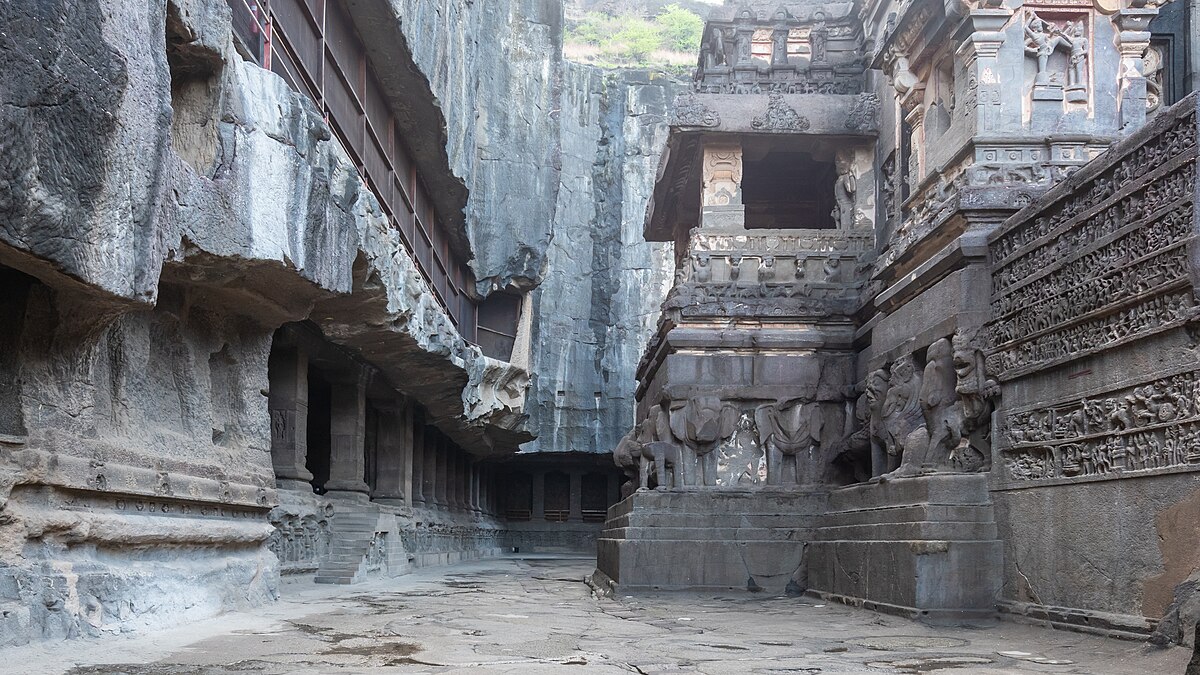
Courtyard and Mahabharata reliefs, Kailasa Temple, Ellora — the epic battle narrative carved in basalt. The Mahabharata's crisis preserved in stone at the greatest rock-cut temple in India

The Bhagavad Gita begins on a battlefield. Two armies face each other on the plain of Kurukshetra. Arjuna, the greatest warrior of the Pandava clan, asks his charioteer Krishna to drive him between the lines so he can see who he will fight. He sees cousins, uncles, teachers, friends. He drops his bow. His hands shake. He tells Krishna he would rather die than kill the people he loves.

Krishna's response takes eighteen chapters and constitutes the most concentrated instruction in the spiritual life that the Indian tradition has produced. The Gita is embedded in the Mahabharata, the vast epic of the Bharata dynasty's civil war, but it operates as an independent text, a dialogue between a human being paralyzed by moral crisis and the divine being who is simultaneously his friend and the Lord of the universe. The setting is not incidental. The Gita's instruction arises from a specific crisis (a warrior's refusal to fight) and addresses that crisis on its own terms before transforming it into a universal teaching about action, knowledge, and devotion.

Easwaran's translation, first published in 1985, prioritizes accessibility and contemplative depth over philological precision. His extensive introduction and chapter commentaries situate the Gita within the practice of meditation. This is a practitioner's translation, shaped by decades of teaching and personal practice, and it serves the project's purposes for that reason: it presents the Gita as a living instruction, not a historical artifact.


II. The Three Yogas
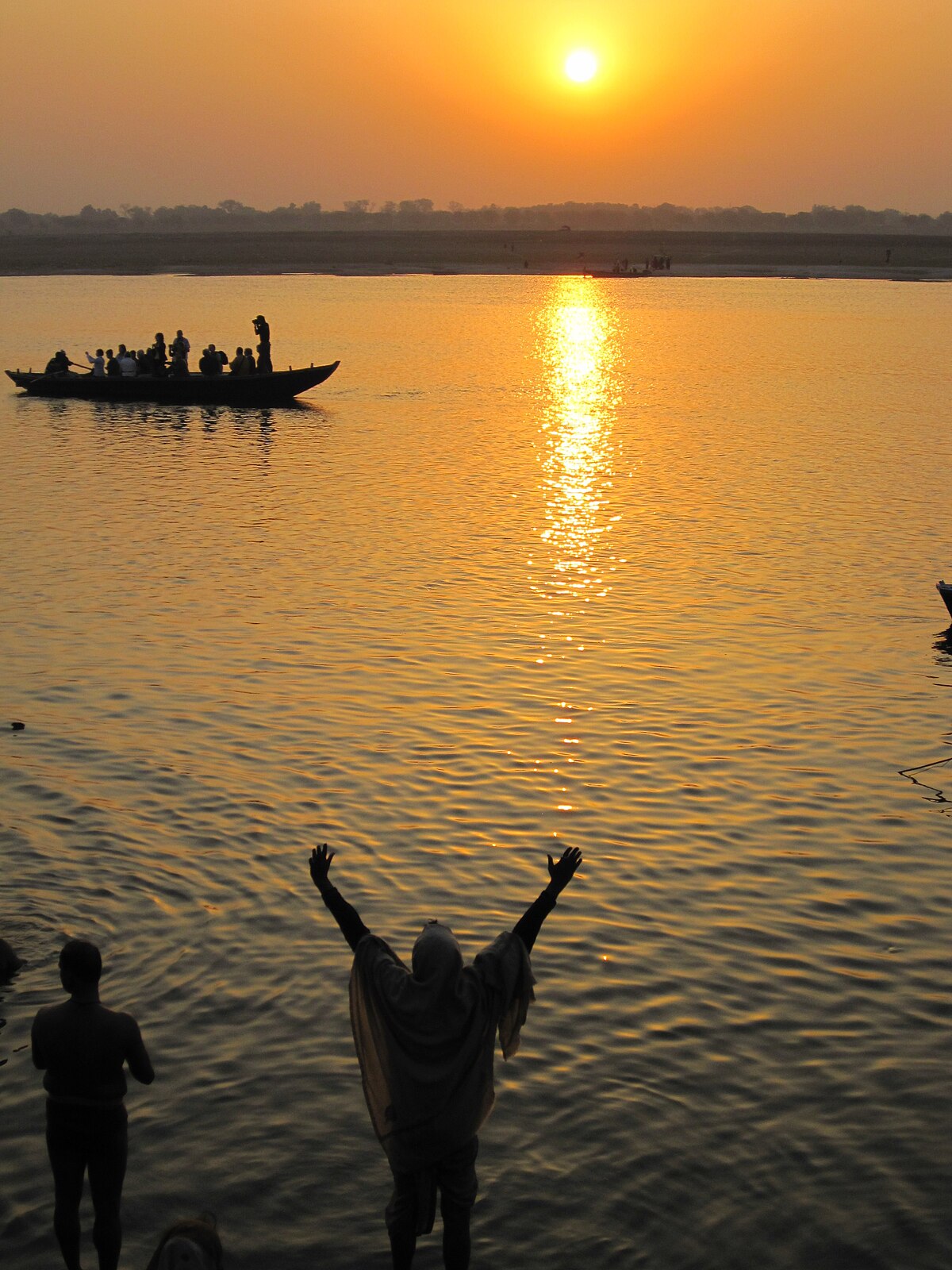
Varanasi, sunrise over the Ganges — the sacred site where karma (ritual action), jnana (contemplative knowledge), and bhakti (devotion) converge at dawn. Three paths practiced at one pilgrimage destination

The Gita's structure organizes itself around three paths to liberation, each suited to a different temperament. Karma yoga (the yoga of action) teaches that the fruit of action belongs to God, not to the actor. Act without attachment to outcomes. Do what is required by your dharma (your role, your duty, your position in the order of things) and release the result. Jnana yoga (the yoga of knowledge) teaches discrimination between the real and the unreal, the Self and the not-Self, the eternal and the transient. Bhakti yoga (the yoga of devotion) teaches surrender to the divine person, Krishna himself, as the most direct path to liberation.

These are not competing paths. Krishna presents them as complementary dimensions of a single discipline. The warrior acts (karma), the philosopher discriminates (jnana), the lover surrenders (bhakti). Each path, pursued fully, arrives at the same recognition: the individual self (atman) is not separate from the divine ground (Brahman), and the sense of separation that produces suffering is an illusion that practice dissolves.

For the project, the three yogas represent the Indian tradition's most systematic account of how initiatory transformation works through different modes of engagement. The Western mystery traditions tend to integrate these modes without naming them separately: the Eleusinian initiate undergoes ordeal (action), receives a vision (knowledge), and surrenders to the goddess (devotion). The Gita makes explicit what the Mysteries performed implicitly.


III. The Cosmic Vision
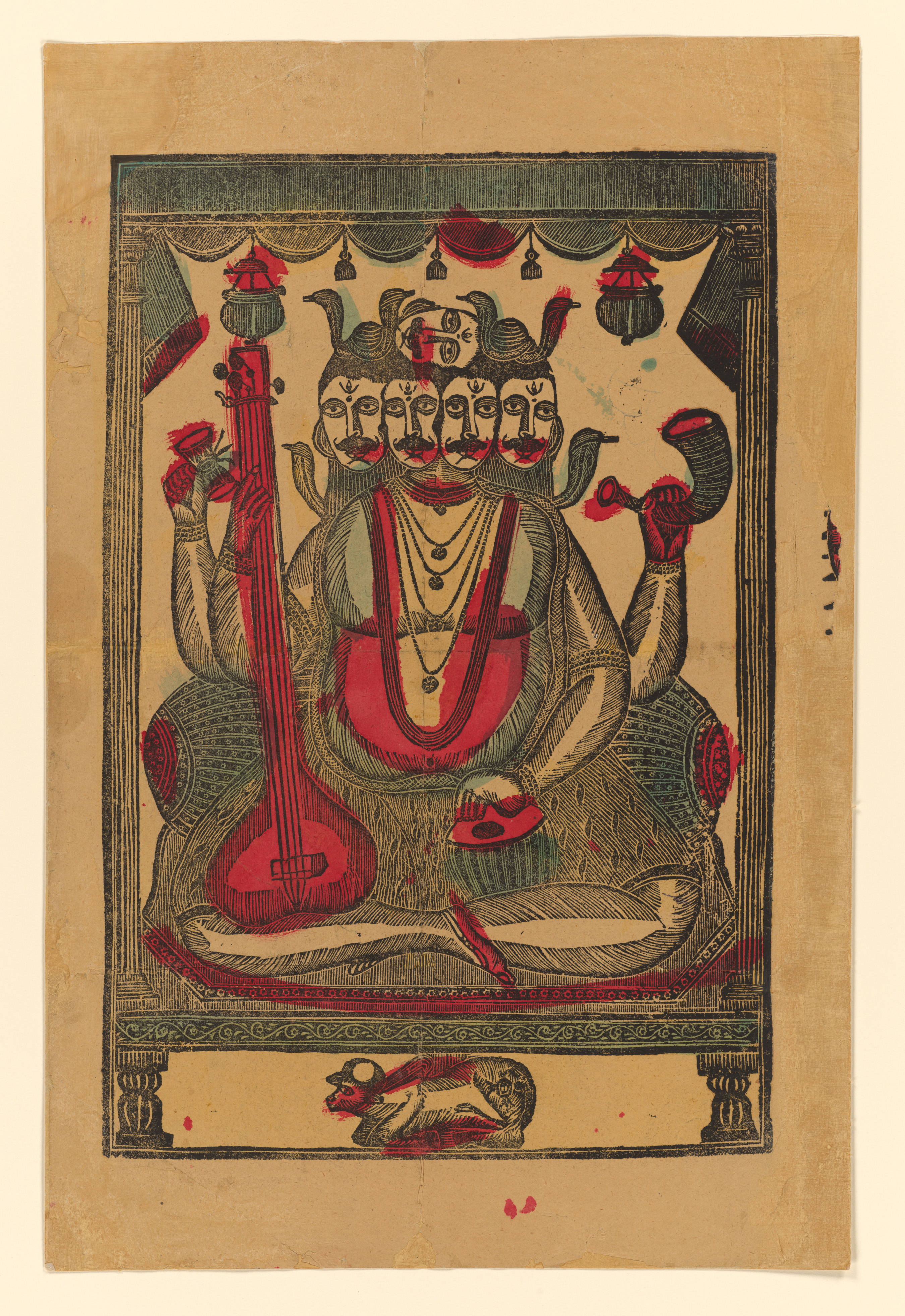
Shiva (Met, ca. 1850-70) — the god who embodies creation and destruction simultaneously. Krishna's revelation in Chapter 11: I am time, the destroyer of all. The cosmic vision that dissolves the frame of ordinary perception

Chapter 11 is the Gita's climax. Arjuna asks to see Krishna's true form. Krishna grants him divine sight. What Arjuna sees is terrifying. The entire universe is contained in a single divine body. All beings enter the mouths of the god like rivers pouring into the ocean, creation and destruction happening simultaneously. The vision is so overwhelming that Arjuna begs Krishna to resume his familiar human form.

This is the Indian epopteia. Arjuna sees the totality of reality in a single perception, and the vision is not consoling. It is annihilating. The divine is everything: destruction, death, the battlefield on which Arjuna stands. "I am time," Krishna says, "the destroyer of all; I have come to consume the world." The vision does not resolve Arjuna's moral crisis. It dissolves the frame in which the crisis exists. From the perspective of the cosmic vision, the distinction between killing and not killing, between victory and defeat, between life and death, belongs to the realm of appearances. The Self that Arjuna fears to destroy in his enemies cannot be destroyed.

The parallel to the Eleusinian experience is structural: the initiate at Eleusis also saw something that dissolved the boundary between life and death, that revealed reality as more than the ordinary mind can hold (CON-0001). The difference is in the setting. The Eleusinian revelation happened inside a temple, within a ritual container, mediated by the Hierophant. The Gita's revelation happens on a battlefield, mediated by the god himself in the form of a friend. The container is the relationship between teacher and student, between the divine and the human, between Krishna and Arjuna.


IV. Dharma and the Problem of Action
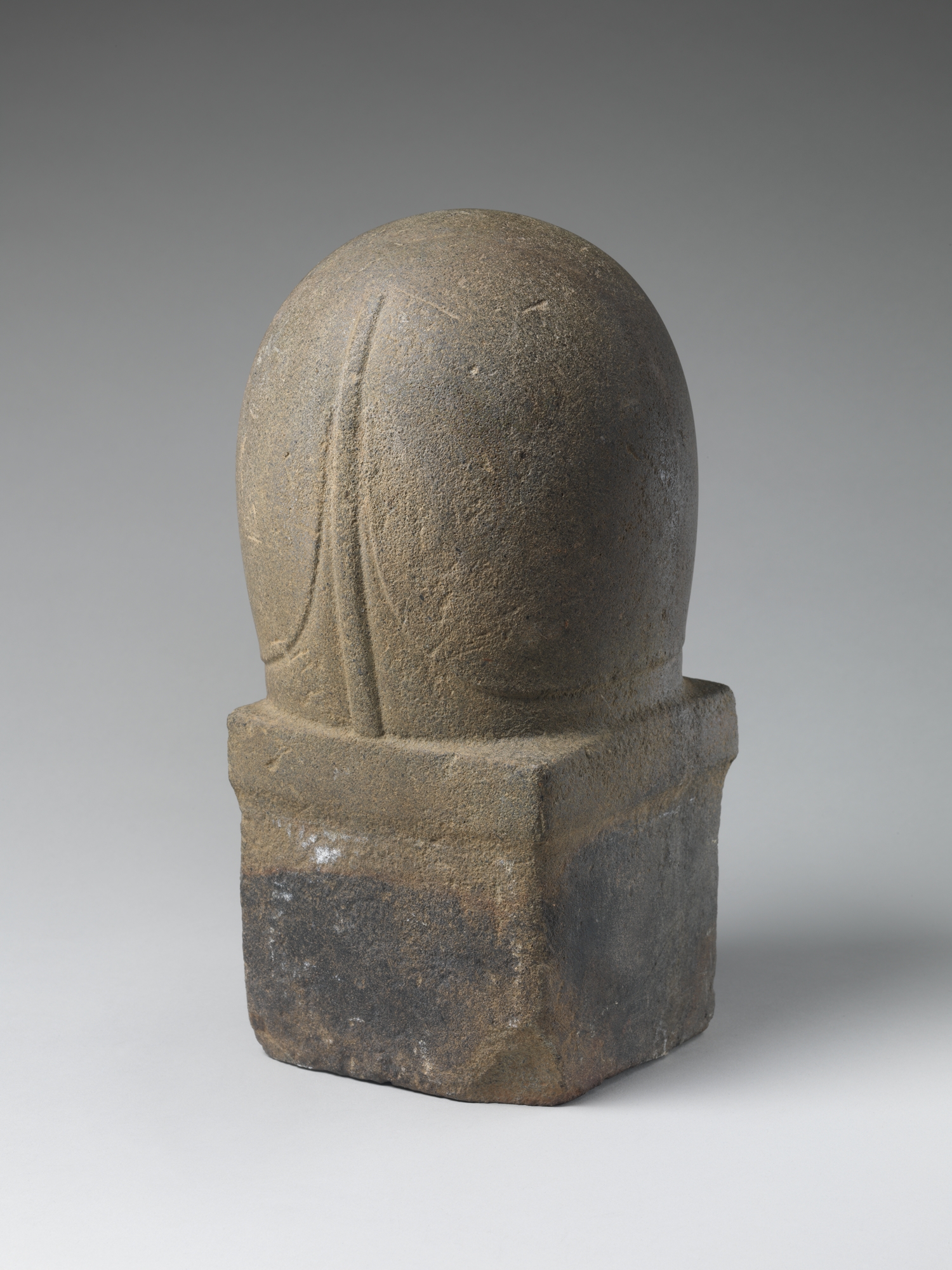
Shiva Linga (Met, 7th-8th century sandstone) — the abstract divine form that dharma addresses. Action released from ego returns to the formless ground: the linga is what remains when all attachment to outcome is dissolved

The Gita's answer to Arjuna's crisis is not "fight" or "don't fight." It is: "act from the Self, not from the ego." Arjuna's paralysis comes from identification with the personal self, the self that loves its cousins and fears their death. Krishna's instruction is to act from the impersonal Self, the atman that is identical with Brahman, that neither kills nor is killed, that acts because action is its nature and releases the result because the result belongs to the divine order.

Critics have read the teaching as quietism (accept your caste role) or as moral abdication (kill your cousins because God says so). Each reading misses the Gita's actual claim (CON-0004). The instruction is not to act without feeling or without moral awareness. It is to act from a consciousness that has been transformed by the practice of yoga, a consciousness that participates in the divine order rather than standing outside it as a separate agent making individual moral calculations. The Gita's ethics are participatory ethics: the right action arises from the right consciousness, and the right consciousness is one that has dissolved the boundary between the individual will and the divine will.

This is the hardest teaching in the text and the one most relevant to the project. Every initiatory tradition the project examines makes a version of this claim: that the transformed consciousness acts differently from the untransformed one, and that the difference is not a matter of better moral reasoning but of a changed relationship to the source of action itself.


V. The Charioteer
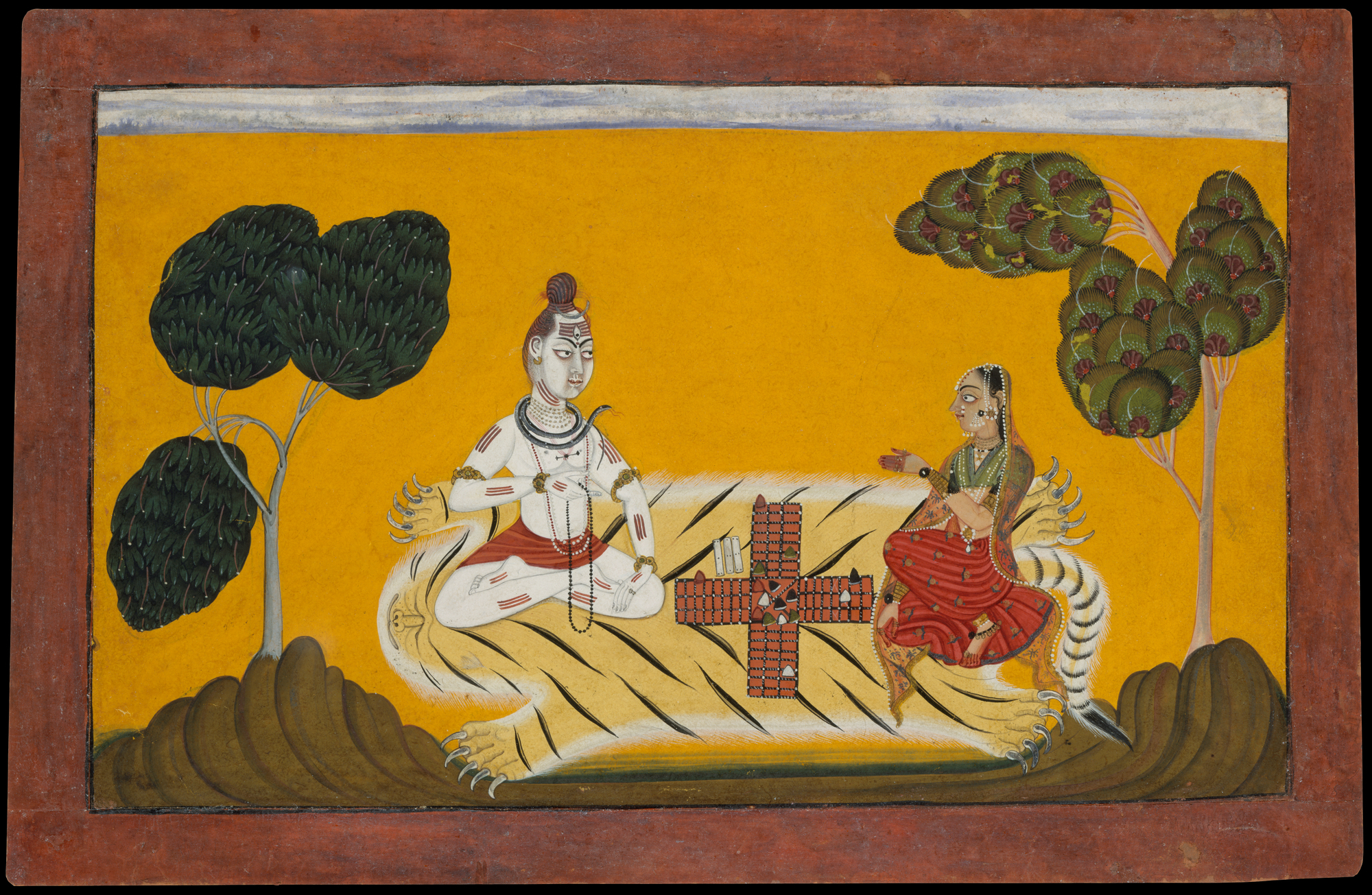
Shiva and Parvati Playing Chaupar (Met, 1694-95, Rajput miniature) — the divine engaged in the phenomenal world as play. Krishna at the reins is the god at play in time: action without attachment, steering without grasping

The Gita's framing image is the chariot. Krishna drives; Arjuna fights. The Platonic parallel is impossible to miss: in the Phaedrus, the soul is a chariot driven by reason, pulled by two horses (noble and appetitive). In the Katha Upanishad (which predates the Gita), the body is the chariot, the intellect the driver, the mind the reins, the senses the horses, and the Self the passenger. The Gita takes this image and incarnates it: the divine drives the chariot. The Self does not merely ride. It steers.

For the listener, the Gita opens one of the most direct lines of comparison between Eastern and Western traditions. The chariot image, the cosmic vision, the teaching on action without attachment, the insistence that liberation comes through practice rather than belief: all of these have precise structural parallels in the Greek and Hermetic traditions the project has already explored. The Gita makes the parallels visible without collapsing the differences. Krishna is not Demeter. The battlefield is not the Telesterion. But the territory they address, the transformation they demand, and the consciousness they cultivate speak to each other across the traditions with a clarity that the project exists to register.

More Essays

What Happened Inside the Mysteries

The founding long-form essay of the Mystery Schools project: an imaginative synthesis of classical archaeology, consciousness evolution, neuroscience, and Western esotericism.

Dear Unknown Friend

A reading essay on Valentin Tomberg's Meditations on the Tarot, moving through concentration without effort, analogy, the Hermit's neutralization of binaries, the scientific creed, and anonymous transmission.

The Cartographer's Blind Spot

Eliade's Rites and Symbols of Initiation gave the modern West its most influential map of initiatory structure. This essay engages both the power and the limitation of his comparative method, asking what the tripartite schema reveals about consciousness transformation and where its universalizing impulse becomes a cage that obscures the very phenomena it describes.

The Sober Witness

Burkert's Ancient Mystery Cults is the foremost empirical account of what the five major mystery traditions actually looked like. This essay engages his insistence on institutional specificity and ritual mechanics, honors his refusal to romanticize, and asks the question his method forbids: not what were the mysteries, but what did they do to consciousness?

The Garment and the Stage

Barfield's Saving the Appearances is the single most important theoretical text for the Mystery Schools project. This essay engages his argument that perception itself has a history, that the ancient world was not a stage but a garment, and that the trajectory from original participation through the hardening points toward a final participation that the mystery traditions may have anticipated.

The Oath and the Roses

The only Latin novel to survive complete from antiquity is also the single most important first-person account of mystery initiation. Apuleius's Golden Ass enacts in narrative form the arc the project traces across all traditions: degradation through unprepared contact with the sacred, descent into embodied helplessness, and restoration through the goddess who moves first.

The Architecture of Descent

Dante's Commedia enacts the full initiatory structure that the project traces across all traditions: descent through death, purification through ordeal, ascent to direct vision. The essay reads the poem not as medieval theology set to verse but as evidence that the katabasis-anabasis pattern survived as a living architecture of spiritual experience long after Eleusis fell.

The Golden Bough and the Weight of History

Virgil's Aeneid contains the most sustained literary katabasis in Latin literature and the direct predecessor to Dante's Commedia. Unlike Odysseus or Orpheus, Aeneas descends not for personal gain but to receive the burden of history. The essay reads Book VI as initiatory architecture and the Gate of Ivory as a warning about the gap between vision and record.

The Rage and the Recognition

The Iliad is not an initiation narrative. It is the poem that establishes what consciousness looks like before initiation: the heroic mode, brilliant and lethal, cracked open by grief into something the heroic code cannot contain. Achilles's recognition of Priam as human father is the metanoia that makes the Odyssey's initiatory journey necessary.

The Dead Who Know the Way Home

The Odyssey is the oldest surviving initiation narrative in Western literature. Its deep structure follows the initiatory pattern centuries before the mystery cults formalized it: separation, ordeal, encounter with death, transformed return. Book XI's nekuia is the first literary katabasis, and the poem's implication is that the initiatory structure was already active in Greek consciousness at the earliest recorded moment.

The God Who Went Down Laughing

Aristophanes's Frogs is the only surviving ancient text that stages a complete katabasis as comedy. Dionysus descends to Hades to fetch a dead tragedian, and the play's laughter is not incidental to the initiatory structure but part of it. The essay reads Frogs as evidence that the Mysteries and the theater were twin Dionysian institutions.

The First Naming of What Is

Hesiod's Theogony is the first systematic cosmogony in the Western tradition — a genealogy of the gods that doubles as a logic of how reality differentiates from primordial openness through grounding and generation. Works and Days preserves the earliest Greek myth of the Five Races, a decline narrative the project reads as testimony about the loss of original participation.

The Gods Withdraw, the Humans Burn

The four plays in Euripides I — Alcestis, Medea, The Children of Heracles, Hippolytus — document a theological crisis at the heart of fifth-century Athens. The gods are present but no longer reliably aligned with human meaning. The essay reads Euripides as a seismograph of the early Hardening: the moment participatory consciousness begins to crack.

The Invisible Fraternity and Its Visible Historian

Waite's 1924 history is the most thorough English-language account of the Rosicrucian movement, written by a scholar who was also an initiate. The essay reads it as evidence for the egregore phenomenon: the power of an initiatic aspiration to generate real institutions even when no original institution can be documented.

The Book That Unsays Itself

The Tao Te Ching opens with an act of philosophical self-cancellation: the Dao that can be spoken is not the constant Dao. The essay reads the text as the Daoist form of participatory consciousness, where wu wei (action without force) is the Eastern counterpart to what the Western mystery traditions reach through initiation and descent.

The Teaching at the Foot of the Teacher

The Upanishads are the philosophical summit of the Vedic tradition and the Eastern counterpart to the Eleusinian Mysteries: both claim that direct experiential knowledge of ultimate reality transforms the knower. The essay reads the Katha Upanishad's descent to Death as structural katabasis and the Upanishadic epistemology as participatory knowing.

The Analyst in the Telesterion

Von Franz reads Apuleius's Golden Ass as a map of individuation rendered in narrative form before Jung existed to name the process. The donkey is the shadow swallowing the ego whole; Psyche's descent is the anima's own differentiation; Isis is the Self arriving when the ego has been sufficiently dissolved. The project takes this psychological architecture and asks the question von Franz's method cannot: whether the territory the psyche maps is merely internal.

The River Has No Teacher

Hesse's 1922 novel stages the most radical claim a spiritual narrative can make: that the greatest teacher in the story is wrong — not in what he knows, but in the assumption that what he knows can be transmitted through doctrine. Siddhartha walks away from the Buddha and into the world, and the novel follows what happens when a consciousness must descend into lived experience because no teaching can substitute for it.

The Diagnosis That Outlived Its Doctor

René Guénon's 1927 polemic is the Traditionalist diagnosis of modernity as the Kali Yuga, an age that has not lost the hierarchy of knowledge but inverted it. The essay reads the book as the ground on which the counter-initiation concept later stands, weighs its diagnostic power against its anti-historical exclusivism, and follows the dangerous political afterlife of Traditionalism from Evola to Dugin.

The Borrowed Name and the Brilliant Darkness

An anonymous Syrian monk, writing around 500 CE under the stolen name of an apostle's convert, smuggled a body of Neoplatonic mysticism into Christian orthodoxy. The essay reads the Dionysian corpus as the moment mystery-school metaphysics changed clothes, traces its apophatic core — the "brilliant darkness" of unknowing, and follows its underground passage into the Western contemplative tradition from Eriugena to Eckhart.

The Work the Mind Cannot Do

Iamblichus wrote On the Mysteries around 300 CE as a reply to Porphyry's skeptical letter on the value of ritual, signing it with the mask of an Egyptian priest. The essay reads the book as the founding defense of theurgy: the argument that a fully descended soul cannot think its way back to the divine, and that the ascent must be completed by god-work performed in matter, the Mysteries carried forward in philosophical form.

The Flight of the Alone

The Enneads collect Plotinus's treatises on the One, Intellect, and Soul, and on the soul's descent into matter and its return. The essay reads Plotinus as a practitioner rather than a theorist, a philosopher who reported union with the One from experience, and sets his contemplative ascent against Iamblichus's theurgy, while weighing the real convergence between henosis and the Vedantic identity of atman and brahman.

The Faculties That Slumber

How to Know Higher Worlds is Rudolf Steiner's practical manual of modern initiation: a step-by-step discipline of reverence, thought-control, and moral training that he printed openly, for an individual to walk alone. The essay reads it as the operative tradition's modern manual, the clearest account of what initiation had to become to survive into a consciousness with a free, self-aware ego.

The Doctrine Behind the Doctrines

The Secret Doctrine is the most ambitious synthesis in modern esoteric literature: Blavatsky's claim of one lost wisdom-tradition behind all religions, science, and philosophy. The essay reads it as both a real bridge, the route by which Eastern concepts entered Western consciousness, and a cautionary mirror of the project's own synthetic method when ambition outruns rigor, transparency of sources, and the discipline of distinction.

0:00
0:00