I. The Historian Who Was Also an Initiate
Arthur Edward Waite published The Brotherhood of the Rosy Cross in 1924, and it remains the most thorough English-language history of the Rosicrucian movement. Waite was not an outsider. He was a member of the Golden Dawn, a Freemason, and a lifelong student of Western esotericism who had translated the key alchemical and mystical texts from Latin and French. He brought to the Rosicrucian question something rare: the combination of a scholar's demand for evidence and an initiate's understanding of what initiatic claims actually mean.
The result is a book that frustrates both camps. Academic historians find Waite too credulous about the reality of invisible orders. Occultists find him too skeptical about the grand narrative of an unbroken Rosicrucian tradition stretching back to ancient Egypt. Waite insists on examining every document, every claimed lineage, every alleged connection to earlier traditions, and his verdict is consistently that the documentary evidence does not support the extravagant claims made by Rosicrucian organizations about their own antiquity. What the evidence does support, he argues, is something more interesting than an ancient secret society: the repeated emergence of a certain pattern of esoteric aspiration in Western culture, a pattern that regenerates itself regardless of whether any continuous institutional transmission exists.
II. The Manifestos and the Question of Existence
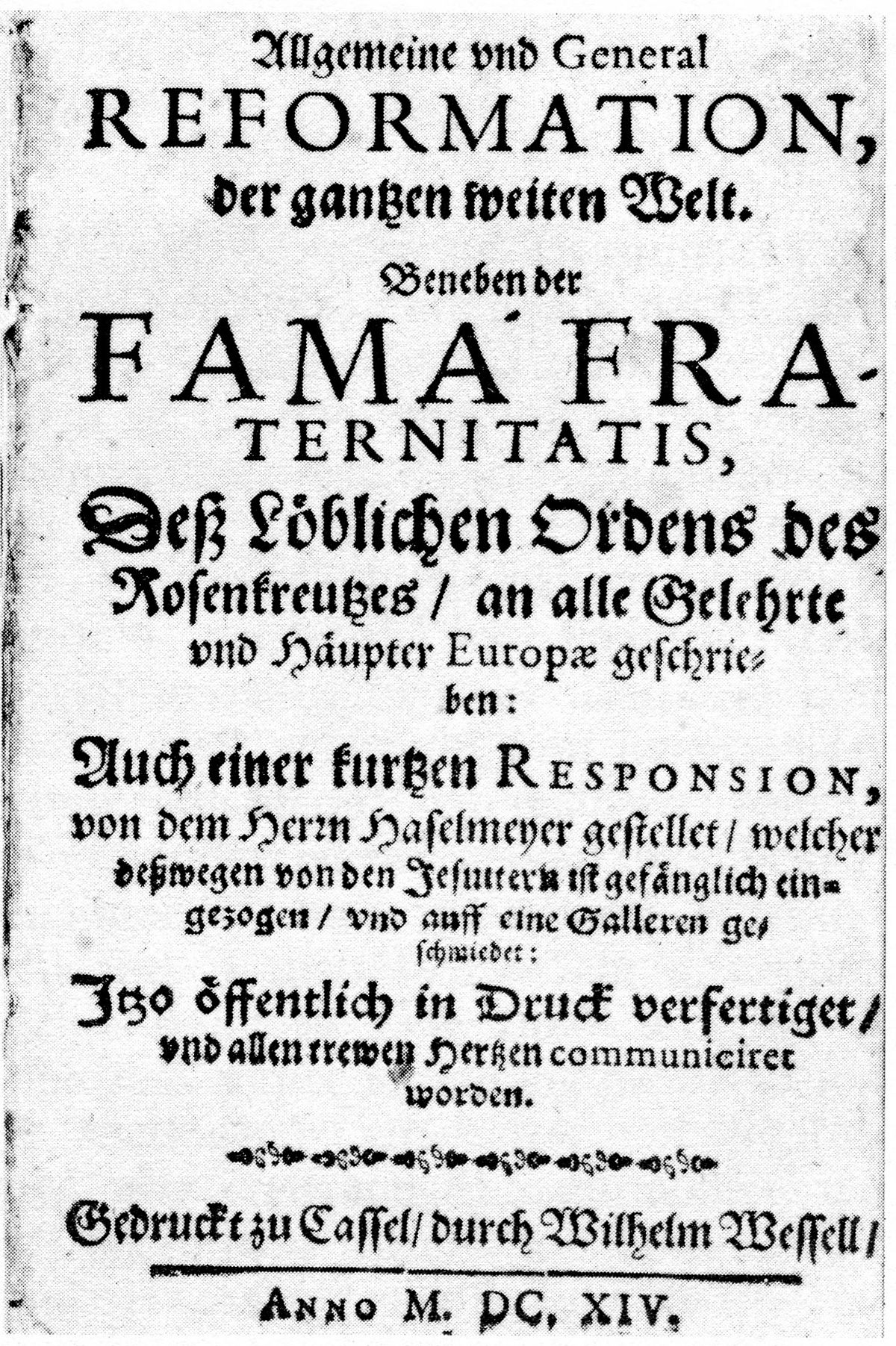
The Rosicrucian movement enters documented history with the publication of three texts in early seventeenth-century Germany: the Fama Fraternitatis (1614), the Confessio Fraternitatis (1615), and the Chemical Wedding of Christian Rosenkreuz (1616). The Fama announces the existence of a secret brotherhood founded by a German traveler named Christian Rosenkreuz, who had journeyed to the East to study with the sages of Damascus and Fez, then returned to Europe to establish a fraternity dedicated to healing the sick and reforming knowledge in preparation for a coming spiritual transformation.
Waite's analysis of these documents is exacting. He traces the probable authorship of the Chemical Wedding to Johann Valentin Andreae, a Lutheran theologian who later dismissed it as a ludibrium, a joke or literary game. He examines the Fama and Confessio for internal evidence of their origins and finds a complex mixture of genuine spiritual aspiration, Protestant reform politics, and alchemical symbolism. His conclusion: the manifestos describe an ideal, not an existing institution. The Brotherhood of the Rosy Cross as depicted in the Fama probably never existed as a physical organization. What existed was the aspiration itself, and the aspiration proved powerful enough to generate real organizations that claimed to embody it.
"Did the Rosicrucians exist?" is the wrong question to ask. What matters is why the pattern of invisible fraternity and secret knowledge keeps regenerating itself in Western culture. Waite's book, for all its Victorian density, takes this question seriously.
III. The Egregore Problem
The Rosicrucian case is the clearest example in the project's source base of what the KB calls the egregore (CON-0036), a collective thought-form that acquires autonomous existence through sustained attention and ritual practice. Whether the Brotherhood existed before the manifestos is disputed; what is certain is that afterward enough people believed in it that the order functioned as real. The egregore was called into being by its own announcement.
Waite documents this process in painstaking detail. Within years of the Fama's publication, hundreds of pamphlets appeared across Europe, some attacking, some defending, and some claiming membership in the invisible order. Figures like Michael Maier, Robert Fludd, and Thomas Vaughan produced elaborate alchemical and philosophical works under the Rosicrucian banner. Lodges formed. Initiatic grades were established. By the eighteenth century, Rosicrucian degrees had been absorbed into Freemasonry, and by the nineteenth century, organizations like the Societas Rosicruciana in Anglia and the Hermetic Order of the Golden Dawn were performing elaborate rituals derived, however distantly, from the impulse the manifestos had articulated.
Whether any of these organizations transmitted an authentic initiatory current is a question Waite leaves deliberately open. His method is to examine each claimed transmission on its documentary merits and to find, in almost every case, that the chain of evidence breaks. What does not break is the aspiration. The Rose Cross as a symbol of spiritual transformation through the union of opposites (the rose of the soul on the cross of matter) persists across every organizational form the movement takes.
IV. The Prisca Theologia in Rosicrucian Dress
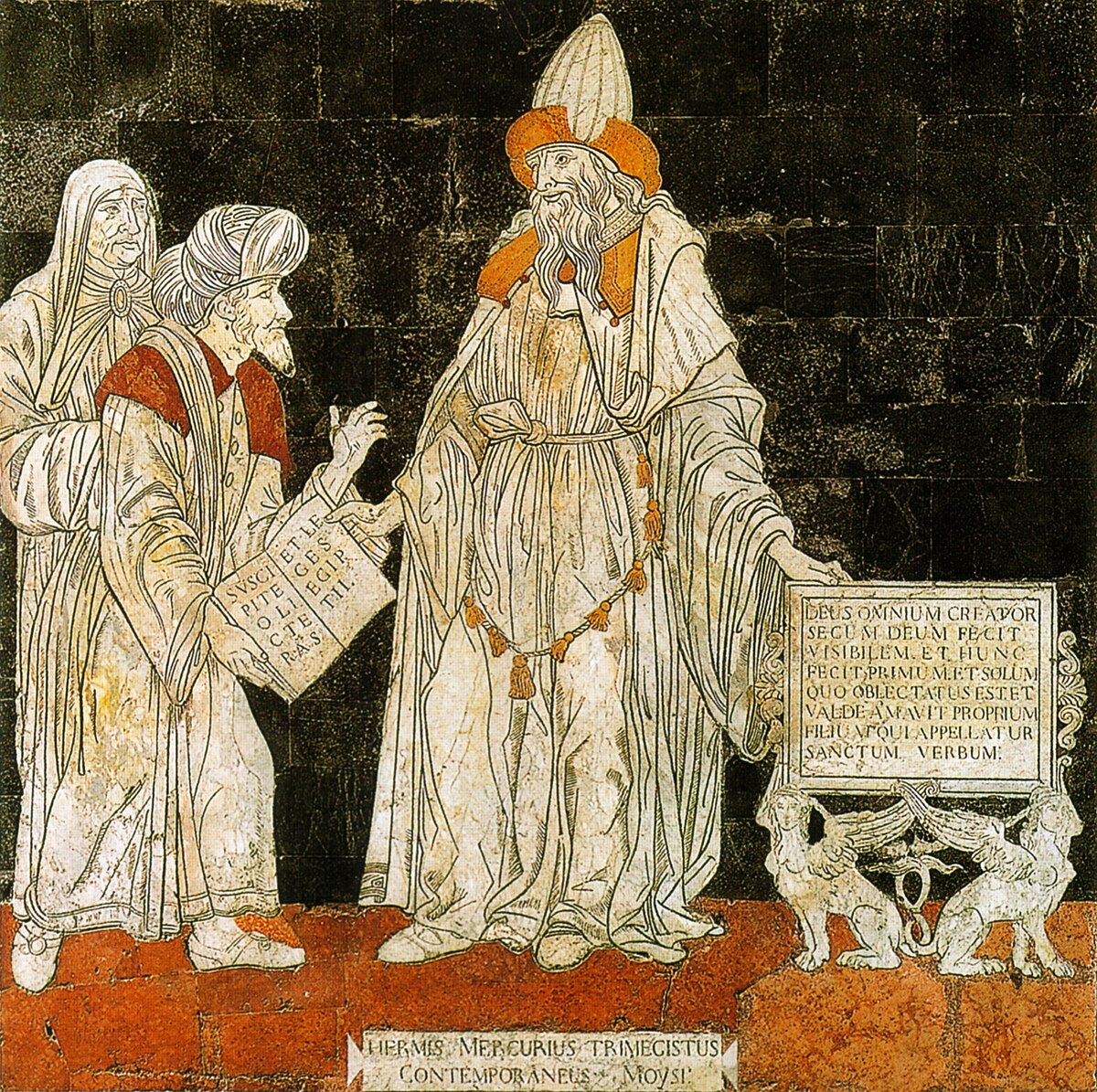
The manifestos claim that Christian Rosenkreuz brought his knowledge from the East. This claim positions the Rosicrucian movement within the tradition of prisca theologia (CON-0022): the idea of a single primordial wisdom, known to the ancients and transmitted in fragmentary and coded form through various channels to the present. The Renaissance rediscovery of the Hermetic Corpus (attributed to Hermes Trismegistus), the Neoplatonic revival under Ficino and Pico, the Kabbalistic synthesis of Reuchlin, all fed the same conviction that lay behind the Rosicrucian manifestos: that the wisdom traditions of antiquity contained a unified science of the soul that the modern world had lost and needed to recover.
Waite is sympathetic to this aspiration but relentless about the evidence. He shows that the claimed Eastern origins are literary, not historical. No documentary evidence connects Christian Rosenkreuz to any actual Eastern school. The alchemical symbolism of the Chemical Wedding draws on European traditions, not Eastern ones. The Kabbalistic elements come through the Latin Kabbalah of the Renaissance, not through direct transmission from Jewish sources.
None of this diminishes the Rosicrucian impulse for the project's purposes. The claim of ancient origins is itself the point. Every Western esoteric movement from the Renaissance forward has asserted a connection to prisca theologia, and the assertion functions as a legitimation strategy and as a genuine expression of the intuition that the knowledge these movements seek is older than any institution. Whether the chain of transmission is historical or imaginative, the aspiration toward a unified spiritual science is the constant.
V. What Waite Unlocks
The project needs Waite for the episodes on the Templars and the Invisible College because Waite is the historian who most carefully bridges the gap between the esoteric tradition's self-understanding and the documentary record. He does not flatten the Rosicrucian movement into a hoax or a delusion. He does not inflate it into a genuine secret society with an unbroken line to antiquity. He holds both the aspiration and the evidence in view and lets the tension between them remain productive.
For the listener, Waite's book demonstrates a principle the project returns to across every tradition: the power of the initiatic impulse to generate institutions, symbols, and practices even when (perhaps especially when) no original institution can be documented. The Rosicrucian case is the Western esoteric tradition's most vivid example of an egregore that became, through the force of collective imagination and ritual practice, as real as any documented order. Waite, the scholar-initiate who spent decades inside the tradition he was documenting, understood this. His book is the proof that rigorous history and genuine respect for the esoteric impulse are compatible and mutually necessary.