I. Before Philosophy Had a Name
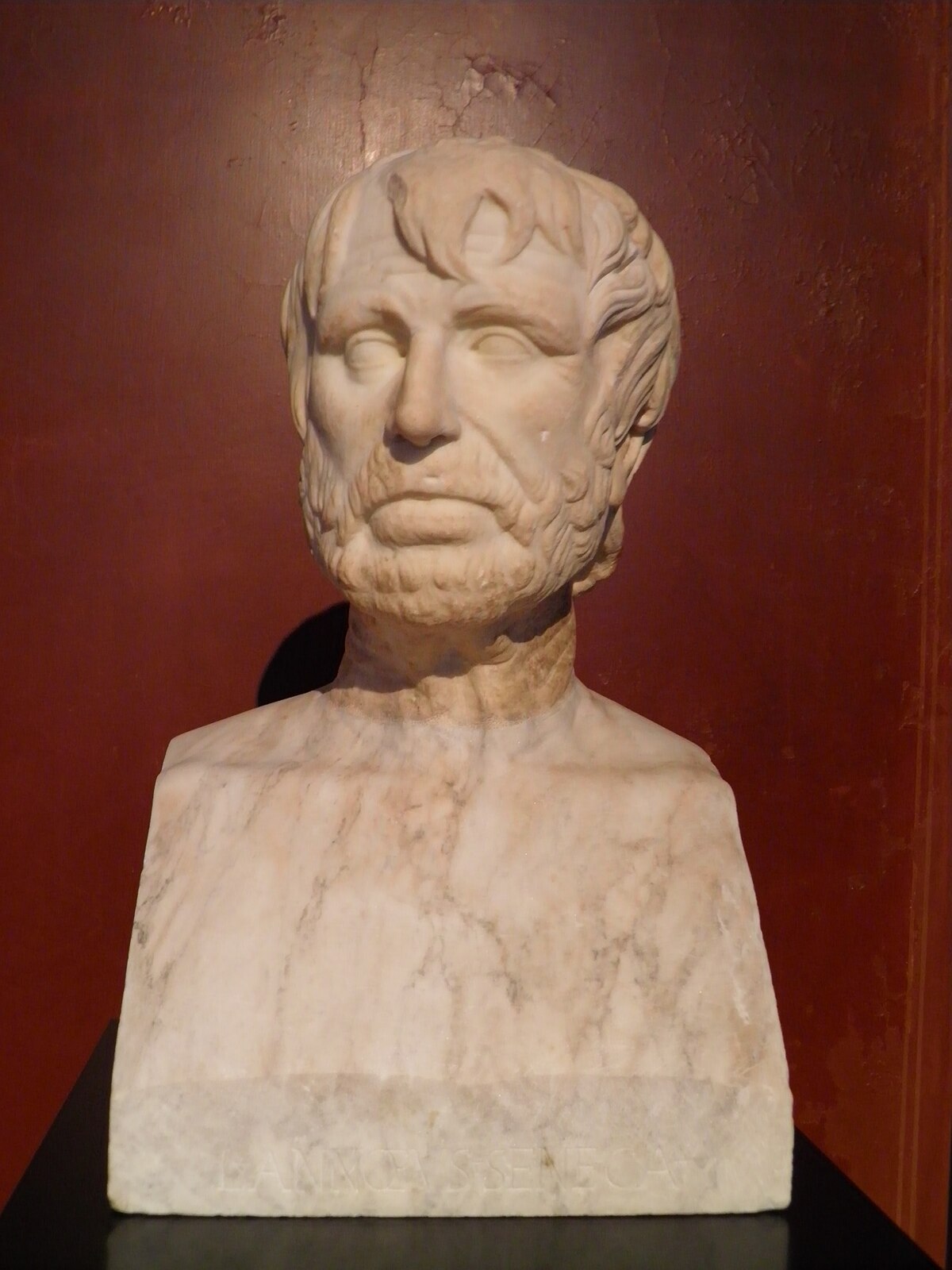
Somewhere around 700 BCE, a shepherd on Mount Helicon heard the Muses speak. Their first words were a warning: "We know how to say many false things that seem like true things, but we also know, when we wish, how to speak the truth." This is Hesiod's Theogony: not a creation myth in the usual sense, but the first systematic attempt in Greek to name the structure of reality from its origin forward. Before Thales asked what the world is made of, before Parmenides distinguished being from becoming, before Plato constructed his divided line, Hesiod stood at Helicon and gave the Western mind its first cosmogony.
What he produced is not philosophy. It is something the project needs more than philosophy: a direct expression of the consciousness that preceded it. The Theogony does not argue that the world has an intelligible structure. It enacts the structuring. Chaos, then Earth, then Eros, then the successive generations of gods, each emerging from the last through a logic that is generative, the way a plant produces leaf after leaf according to an internal necessity that no leaf contains in isolation. Hesiod names the powers that compose reality. The naming is itself an act of participation in those powers.
II. Chaos Is Not Disorder
The Western tradition has spent two and a half millennia misreading Hesiod's first word. Chaos does not mean disorder. The Greek khaos (from the verb khaino, to gape or yawn) means the gap, the opening, the primordial space that precedes differentiation. It is not confusion. It is the condition before anything has been distinguished from anything else. Read through Barfield's lens (CON-0039), Chaos is original participation in its most radical form: a state in which no boundary has yet been drawn between perceiver and perceived, between one power and another, between the divine and the material. Those distinctions have not yet emerged.
Then Earth (Gaia), broad-chested, the stable ground. Then Eros, the oldest of the gods, the generative power that drives all subsequent emergence. The sequence is not arbitrary. Hesiod is describing the minimum conditions for a world to exist: an opening (Chaos), a ground (Gaia), and a principle of relation and generation (Eros). Everything that follows (Tartarus, Night, Day, Sky, Ocean, the Titans, the Olympians) unfolds from these three. The cosmogony is also a logic. Before the pre-Socratics formalized the question of arche, Hesiod had already answered it. The origin is not a substance but a process: differentiation from undifferentiated openness, grounding, and the erotic drive toward form.
III. Succession and Swallowing
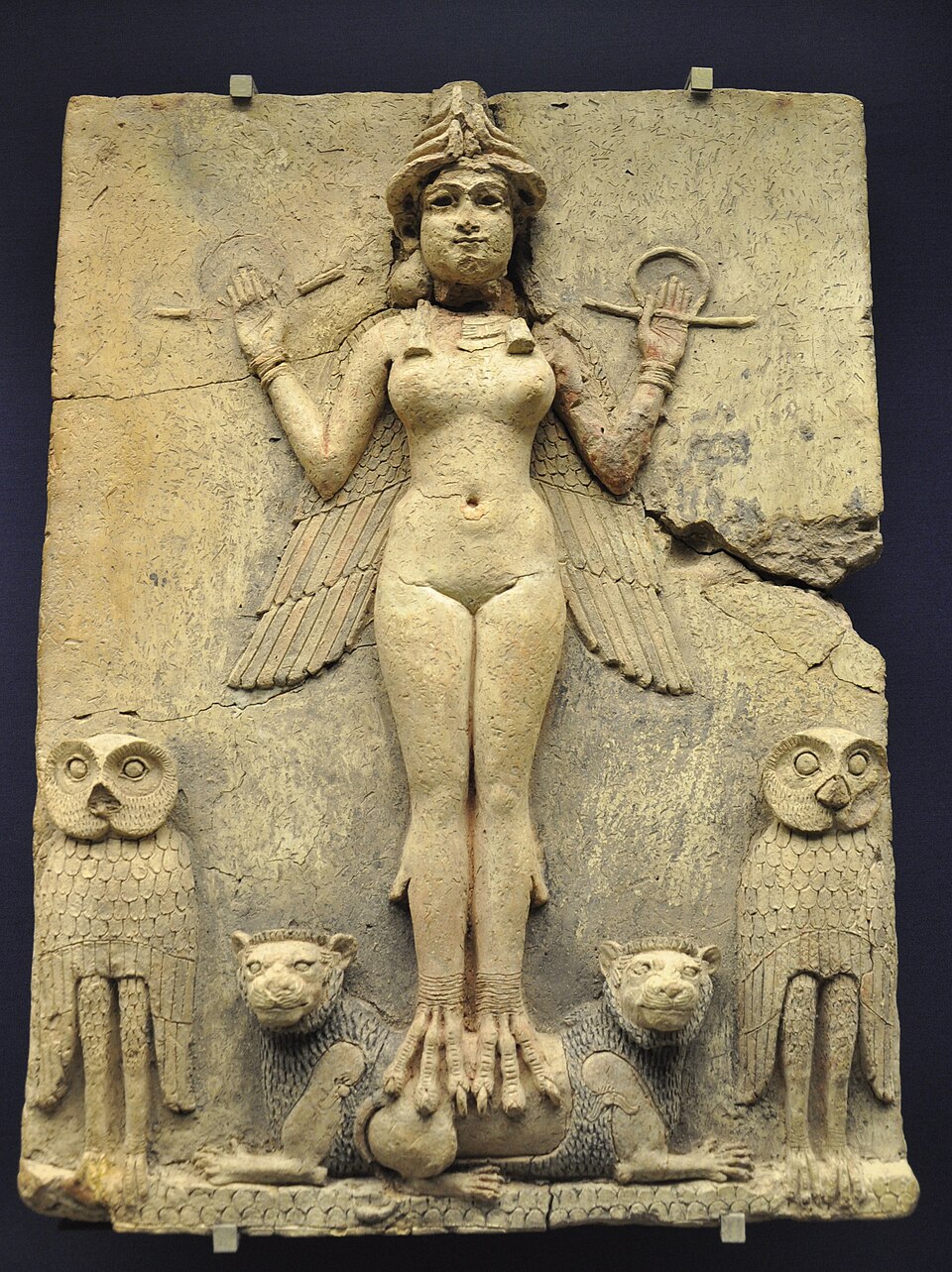
The Theogony's central narrative is violent. Ouranos (Sky) covers Gaia (Earth) in perpetual intercourse and refuses to let their children emerge into the light. Kronos, youngest of the Titans, castrates his father with a sickle Gaia provides. Kronos then swallows his own children to prevent the prophecy that one of them will overthrow him. Zeus, hidden by his mother Rhea, survives, forces Kronos to disgorge the swallowed gods, and establishes the Olympian order after a cosmic war.
Read literally, this is a power narrative about divine succession. Read through the project's lens, it is something more precise: a description of how consciousness differentiates through successive crises of containment and release. Each divine generation tries to hold the next generation inside itself: Ouranos pressing his children back into Earth, Kronos swallowing his children into his own body. Each act of containment fails because the generative principle (Eros, the oldest power) cannot be permanently suppressed. The new form breaks through.
This pattern (the older structure that tries to contain the emerging one, the crisis that forces emergence, the new order that integrates what was released) recurs across the traditions the project examines. It appears in the alchemical nigredo, where the old form must be dissolved before the new can crystallize. It appears in initiation itself (CON-0001), where the profane self must be symbolically destroyed before the initiated self can emerge. Hesiod gives it its earliest Western expression. The violence is not incidental. Differentiation costs something. New consciousness is not given freely by the old consciousness it supersedes. It must be wrested.
IV. Works and Days and the Five Races
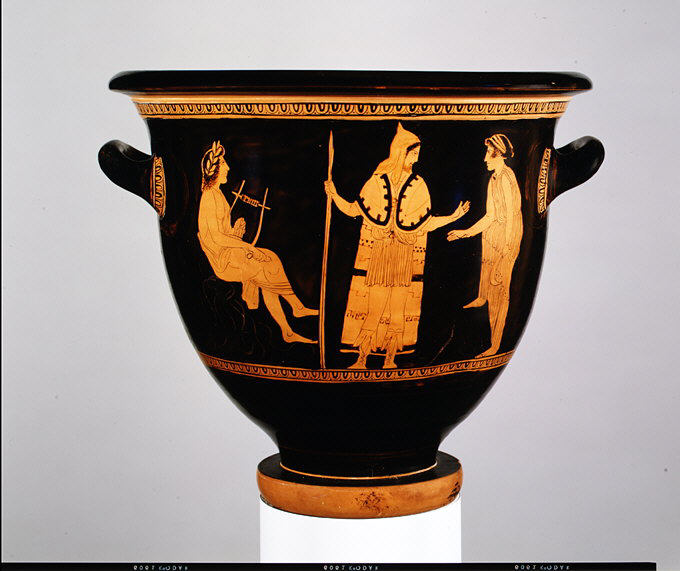
The Works and Days is a different poem with a different purpose, a practical and moral instruction addressed to Hesiod's brother Perses, who has cheated him of his inheritance. But embedded in its agricultural and legal advice is the myth of the Five Races (often mistranslated as "Ages"): Gold, Silver, Bronze, the Heroes, and Iron. This sequence is the earliest Greek version of the decline narrative that Guénon would systematize as the doctrine of the Kali Yuga, and that Gebser would recast as the mutation of consciousness structures.
The Gold Race lived "like gods, with carefree hearts, free from toil and misery." They did not grow old. The earth gave them fruit without labor. When they died, they became benevolent daimones, spirits watching over mortal affairs. This is not nostalgia. It is a description of original participation (CON-0039) in mythic language, a consciousness so continuous with the living world that labor, aging, and death as the modern mind understands them had not yet emerged as experiences. The Gold Race does not work because the boundary between human desire and natural provision has not yet been drawn.
Each successive race represents a further stage of separation. The Silver Race is foolish and violent: consciousness has differentiated enough to act but not enough to act wisely. The Bronze Race is warlike, hard as the metal that names them. The Heroes, inserted between Bronze and Iron, break the strict decline and represent a partial recovery, a generation that achieves something the declining sequence alone would not predict. Then comes Iron, Hesiod's own age: labor, injustice, the gods' withdrawal.
The project does not adopt the pure decline reading. But it takes Hesiod's testimony seriously as the earliest Western record of a perceived loss, a consciousness that remembers, or constructs a memory of, a mode of being in which the division between human and divine, labor and provision, self and world was less absolute than it has become.
V. The Poet as Theologian
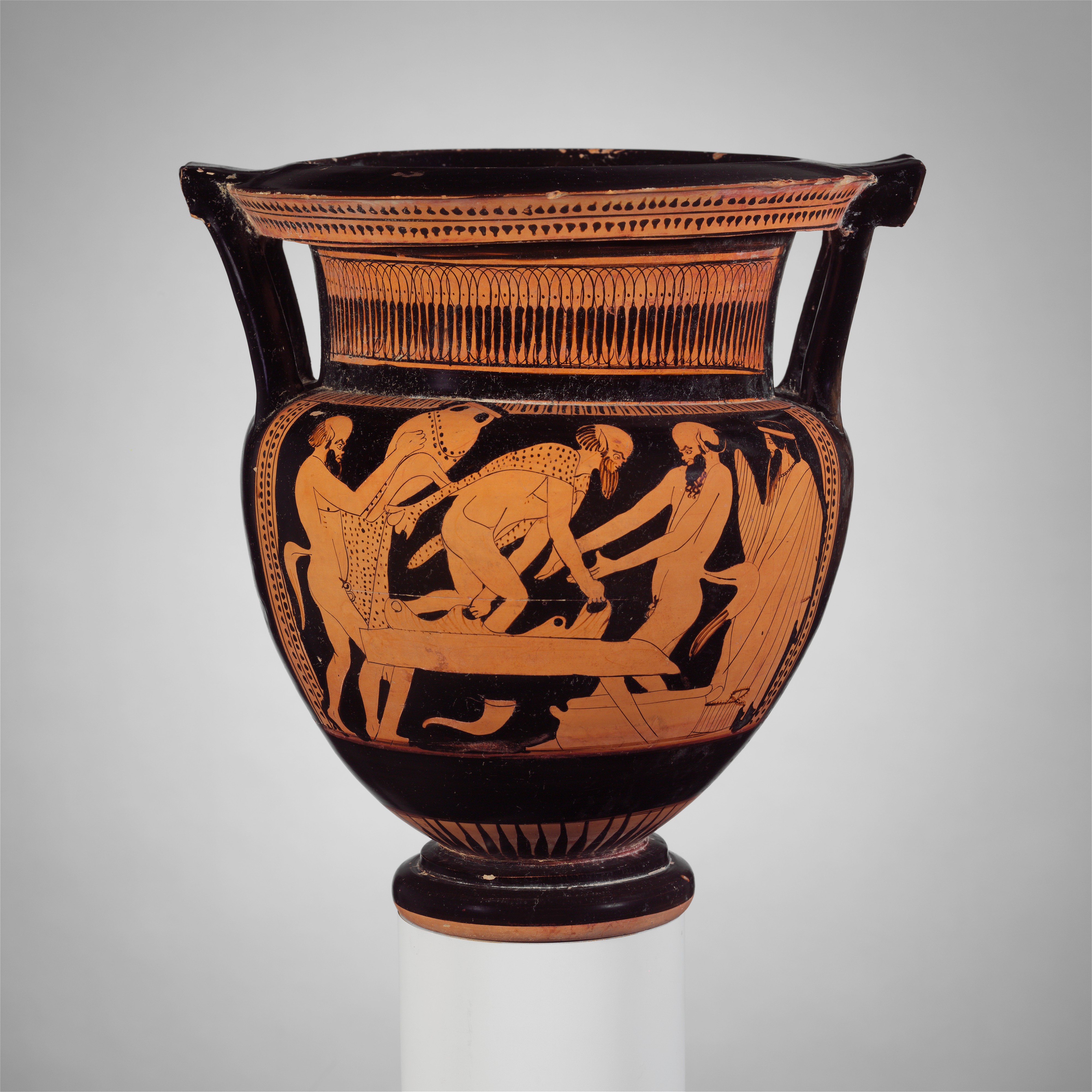
Herodotus said that Homer and Hesiod "gave the Greeks their gods": assigned them their names, their honors, their forms. This is not a casual remark. Before Hesiod, Greek theogonic material existed in oral tradition, fragmented, local, variable. Hesiod systematized it. He did not invent the gods, but he gave them their canonical relationships, their genealogical structure, their narrative logic. The Theogony is theology in its literal sense: theos + logos, an ordered account of the divine.
This matters for the project because Hesiod represents the moment when participatory consciousness begins to organize itself. The Theogony is not yet philosophy. It does not abstract or argue. But it is no longer pure mythos either. It is mythos becoming conscious of its own structure. Hesiod names the Muses individually. He catalogs the rivers, the sea-nymphs, the offspring of Night. The act of cataloging is itself a cognitive event: consciousness stepping back just far enough from the participatory field to perceive it as an organized whole, while remaining close enough to speak from within it.
The Theogony belongs at the beginning of the Western Canon track. It is the hinge text, the moment before philosophy, the moment when the mythic consciousness that will generate philosophy is already performing the cognitive operations (ordering, distinguishing, relating) that philosophy will later formalize. Hesiod is not a primitive. He is the first Western thinker to do in mythic form what Thales will do in conceptual form a century later: ask what reality is structured from, and answer systematically.
What the listener needs to know is that this text is not background. It is not "what the Greeks believed before they learned to think." It is a document of a consciousness actively engaged in the work of structuring reality, and the Theogony's method of structuring (genealogical, generative, narrative, participatory) is different from philosophy's method in ways that reveal what philosophy left behind when it chose abstraction over myth. The project carries both methods. Hesiod is where the conversation begins.